



Self-insuring extended HVAC warranties might look like a smart way to cut costs—but for most HVAC and plumbing businesses, it creates more risk than it removes. Between unpredictable claims, cash flow pressure, and the operational burden of managing everything in-house, self-insuring often costs more than contractors expect. Partnering with a third-party extended warranty provider gives contractors a simpler, more scalable way to offer coverage, protect customer trust, and grow revenue per job without absorbing the financial risk.
If you're weighing both options, here's what you need to know before you decide.
What Does It Mean to Self-Insure an Extended Warranty?
Self-insuring an extended warranty means your business takes on full financial responsibility for warranty claims instead of transferring that risk to a third-party provider. When a covered system fails—whether it's a compressor, a water heater, or a heat pump—your company pays for the parts, labor, and service call out of pocket.
Some contractors set up a reserve fund to cover future claims. Others simply absorb the cost as it comes. Either way, the business is on the hook for every claim, every callback, and every unexpected failure for the full length of the warranty period.
On paper, it sounds straightforward. In practice, it puts your cash flow, your reputation, and your customer relationships at risk—especially as your business grows and the number of active warranties stacks up. As ACHR News has noted, understanding profitability and cash flow management is one of the most critical challenges HVAC contractors face.
What Are the Biggest Risks of Self-Insuring Extended Warranties?
Self-insuring extended warranties exposes HVAC and plumbing businesses to several risks that are easy to underestimate—until they hit all at once.
Financial Risk and Cash Flow Problems
The biggest danger is financial. Even with solid installations and quality equipment, HVAC and plumbing systems can fail due to factors outside your control—manufacturing defects, environmental conditions, or simple wear and tear. When multiple claims land in the same month, the costs stack up fast.
Without a third-party provider absorbing that risk, your business has to cover every dollar. That means dipping into operating funds, delaying equipment purchases, or pulling from savings earmarked for growth. For smaller contractors, a handful of simultaneous claims can create a serious cash flow crunch.
Legal and Compliance Exposure
Self-insuring also opens the door to legal and regulatory risks. In many states, contractors are required to meet specific warranty standards for HVAC and plumbing installations. If your self-insured warranty fails to meet those requirements—or if you're unable to fulfill a claim—you could face fines, lawsuits, or penalties.
Some equipment manufacturers also require that labor warranties be backed by a third party to maintain compliance with their programs. As ACHR News has reported, the evolving landscape of warranty requirements and shifting industry regulations continues to create new challenges for contractors who try to manage warranty obligations on their own. Failing to meet those requirements can jeopardize supplier relationships and limit the brands you can install.
Damage to Reputation and Customer Trust
When a warranty claim falls through or takes too long to resolve, customers notice. And in the HVAC and plumbing industry, reputation drives referrals. A single poorly handled claim can lead to negative reviews, lost future business, and a hit to the trust you've worked hard to build.
With a third-party provider backing your warranties, customers know the coverage is real—and that there's a system in place to handle claims professionally and consistently. To better understand what strong warranty coverage looks like, read about the pros and cons of purchasing an extended warranty.
.jpeg?width=1024&height=1024&name=HVAC_contractor_reviewing_202604271736%20(1).jpeg)
Is Self-Insuring Extended Warranties Really Cheaper?
It rarely is. Self-insuring may seem less expensive upfront because there's no premium to pay a warranty provider. But that calculation ignores several hidden costs that add up over time:
- Unpredictable claim costs. One major compressor replacement or a string of service calls can wipe out months of savings.
- Administrative overhead. Managing claims, tracking warranty periods, processing paperwork, and handling customer disputes all take time—time your team could spend on revenue-generating work.
- Reserve fund management. If you're setting aside money to cover future claims, that capital is tied up and unavailable for growth, equipment, or hiring.
- Opportunity cost. Every hour spent managing warranty claims in-house is an hour not spent closing jobs, training techs, or building customer relationships.
When you factor in the full cost—financial risk, operational burden, and lost opportunities—most contractors find that partnering with a provider is more cost-effective and far more predictable. Compare JB Warranties plan options to see what predictable warranty pricing looks like.
How Does Partnering with a Provider Reduce Risk?
Working with a third-party extended warranty provider shifts the financial risk off your books and onto theirs. Here's what that looks like in practice:
Predictable Costs
Instead of absorbing unpredictable claim expenses, you pay a known cost per warranty sold. That makes budgeting easier and protects your margins—no matter how many claims come in.
Professional Claims Handling
A dedicated warranty provider handles the claims process from start to finish. That means faster resolution for your customers, less administrative work for your team, and a consistent experience that builds trust. According to Contractor Magazine, integrations between field service platforms and warranty providers like JB Warranties are making claims processing even more seamless for contractors.
Transferable Coverage
With a provider like JB Warranties, coverage transfers to new homeowners when a house is sold—at no extra cost. That adds real value for your customers and differentiates your business from competitors who can't offer the same protection. Learn more about how transferable warranties benefit new homeowners and add value to every installation.
Revenue Growth
Extended warranties aren't just about protection—they're a profit driver. Offering third-party-backed warranties increases your average ticket size, gives technicians a simple upsell tool, and creates long-term value from every installation. As ServiceTitan emphasizes, equipping technicians with the right tools and value-adds is one of the most effective ways to boost revenue per job.
Which Option Is Easier for HVAC and Plumbing Businesses to Manage?
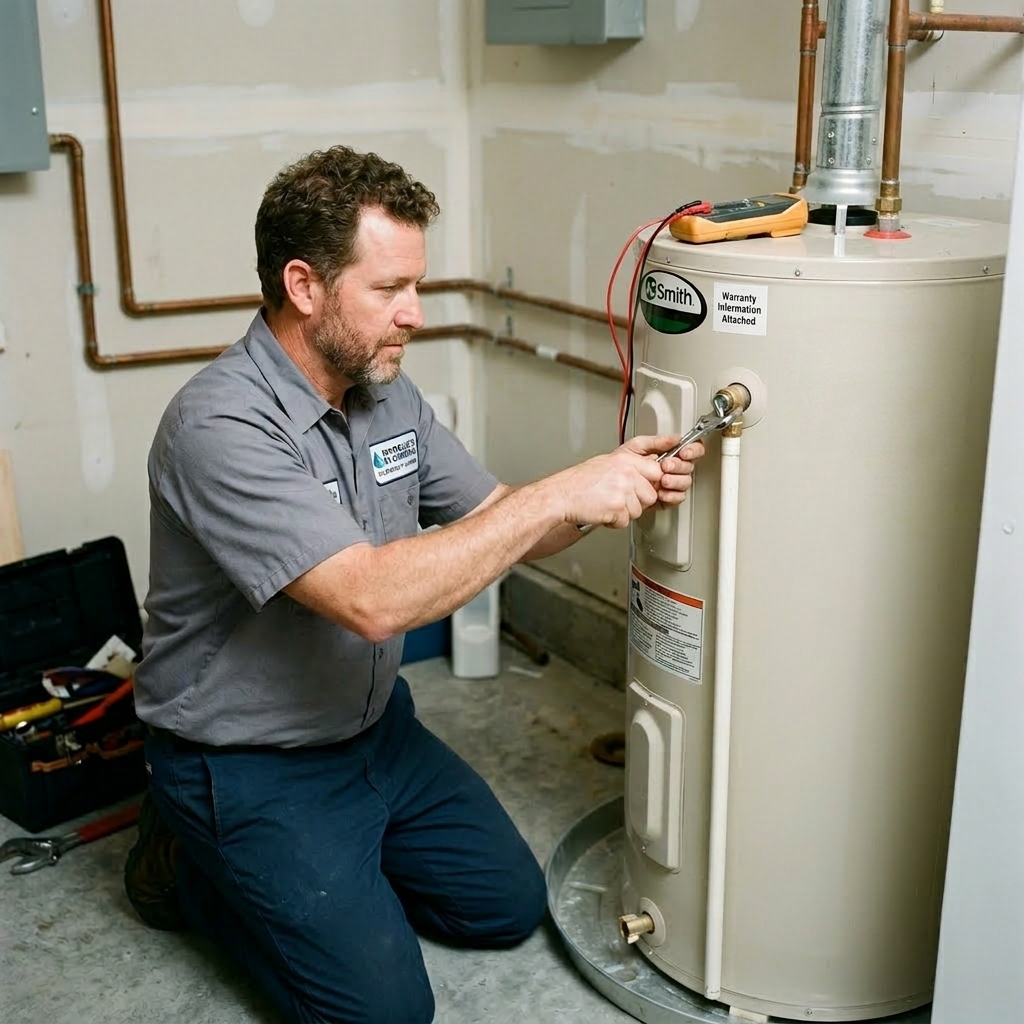
Self-insuring requires your business to handle everything: tracking warranty terms, processing claims, managing reserve funds, and resolving disputes. That's a significant operational load—especially for small to mid-sized contractors who are already stretched thin.
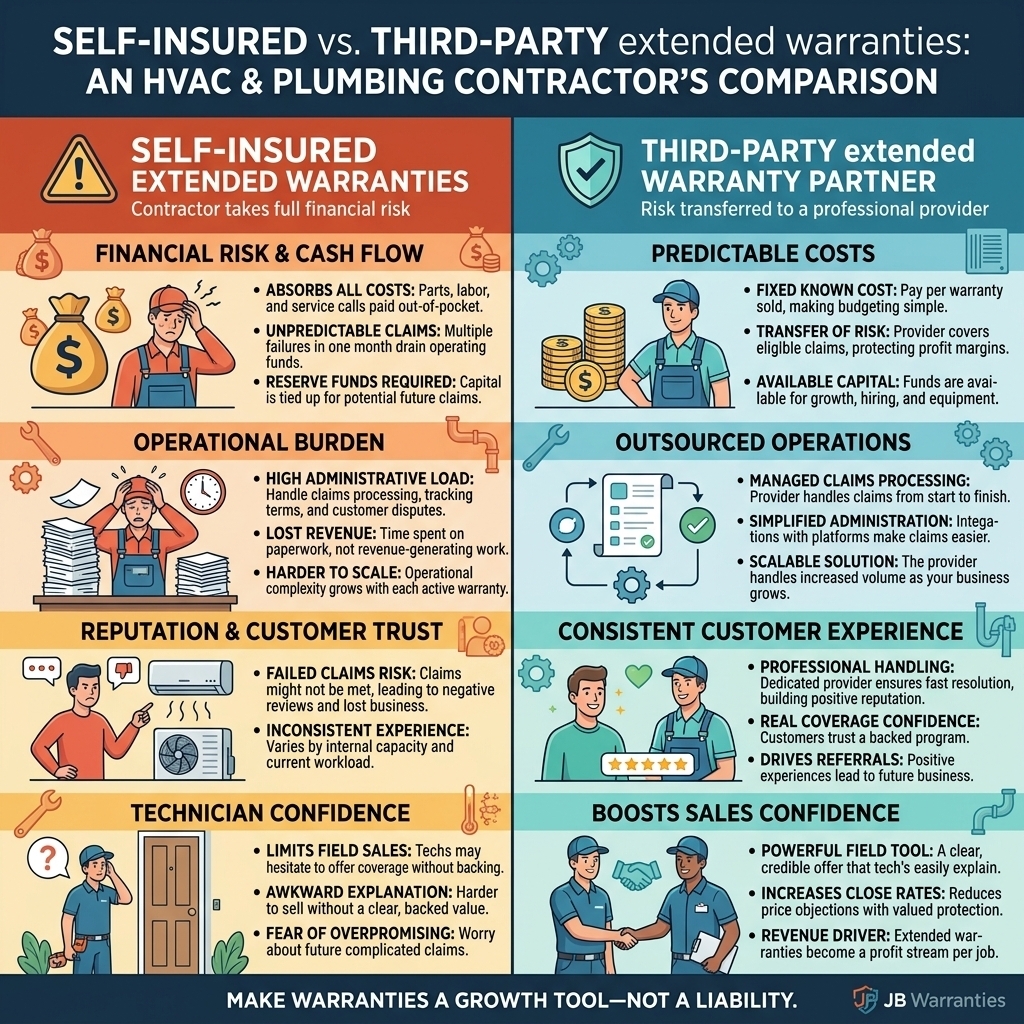
Partnering with a provider simplifies the process. Here's a side-by-side look:
| Self-Insured | Third-Party Provider | |
|---|---|---|
| Claims processing | Handled internally | Managed by the provider |
| Financial risk | 100% on your business | Transferred to the provider |
| Cost predictability | Unpredictable | Fixed cost per warranty |
| Customer experience | Varies by team capacity | Consistent and professional |
| Warranty transfers | Complex to manage | Built-in (often free) |
| Tech confidence | Limited—no backup | High—backed by coverage |
| Scalability | Gets harder as you grow | Scales with your business |
For most HVAC and plumbing businesses, the operational simplicity of working with a provider is just as valuable as the financial protection. Building recurring revenue streams through warranty programs and service agreements is one of the smartest moves a contractor can make for long-term growth.
Which Option Gives Technicians More Confidence in the Field?
This is one of the most overlooked factors in the self-insure vs. partner decision—and it matters more than many business owners realize.
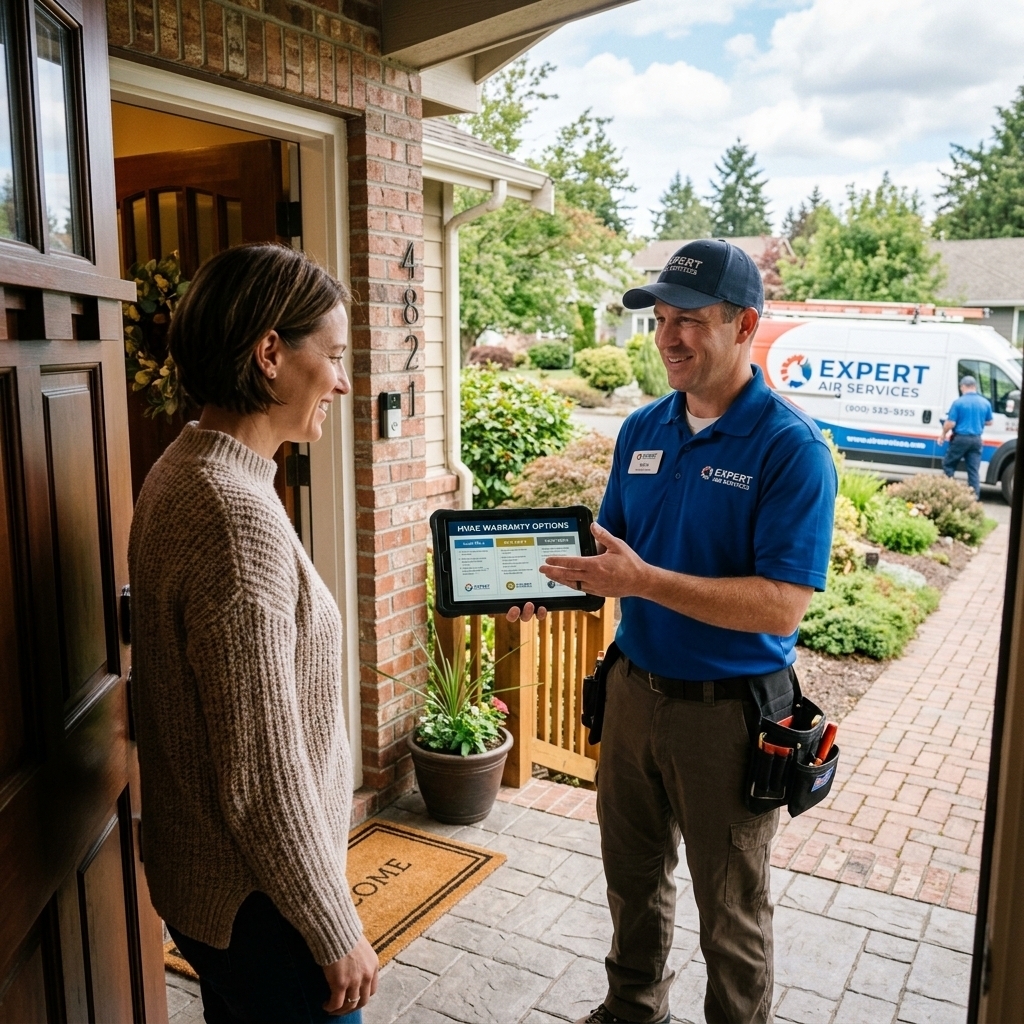
Technicians are the ones having the conversation with homeowners at the point of sale. When they can offer an extended warranty backed by a trusted provider, they have a clear, credible tool to help close the job. It removes the awkwardness of "selling" and replaces it with offering real protection.
Here's what that looks like for your team:
- Simple to explain. "This warranty covers parts and labor for X years, backed by a dedicated warranty company." That's an easy message for any technician to deliver.
- No fear of overpromising. When coverage is handled by a third party, techs don't have to worry about what happens if a claim gets complicated.
- Builds customer trust faster. Homeowners are more comfortable when they know the warranty isn't just a verbal promise—it's backed by a real program.
- Increases close rates. Offering third-party-backed coverage reduces price objections and gives homeowners a reason to say yes on the first visit.
When your techs feel confident about what they're offering, they sell more—without feeling like salespeople. For more on this, check out our guide on how to sell HVAC extended warranties effectively.
How to Decide: Self-Insure or Partner?
If you're still weighing the options, ask yourself these questions:
- Can your business absorb multiple warranty claims in a single month without impacting cash flow? If not, the financial risk of self-insuring may be too high.
- Do you have the staff and systems to manage claims, track warranties, and handle disputes? If this would pull resources from revenue-generating work, a provider makes more sense.
- Are your technicians confident offering warranties in the field? If they hesitate because they're not sure what's actually covered or backed, a third-party program gives them clarity.
- Is your business growing? Self-insuring gets harder to manage as the number of active warranties increases. A provider scales with you.
For most HVAC and plumbing contractors, the answer points in the same direction: partnering with a provider is the simpler, safer, and more profitable path. Explore the full range of benefits that come with HVAC extended warranties to see the complete picture.
Make Warranties a Growth Tool—Not a Liability
Self-insuring extended warranties puts the full weight of every claim on your business. Partnering with a provider lifts that weight, simplifies your operations, and turns warranties into a tool for growth.
The right warranty partner doesn't just handle claims—they help your business increase revenue per job, build customer trust, and give your technicians the confidence to close more work in the field.
Ready to see how a warranty program can work for your business? Become a JB Warranties dealer and start offering coverage that protects your customers and grows your bottom line.


Brian Bohannan
Vice President of Sales at JB Warranties