



TL;DR: Transferable HVAC extended warranties stay with the home when it sells—giving contractors a powerful tool to increase revenue, build homeowner trust, and create long-term service relationships. This guide covers how they work, what they cover, how to sell them, and how to build a technician incentive program that drives results in the field.
Every HVAC job ends with a question: What happens when something goes wrong after you leave?
For most contractors, the answer is a standard manufacturer warranty that covers parts for a few years—and nothing else. But transferable HVAC extended warranties change the equation. They stay with the home, not the owner, which means your coverage keeps working even when the property changes hands.
That distinction matters more than you might think. The U.S. home warranty industry is valued at $3.9 billion, and Florida now requires HVAC manufacturer warranties to transfer automatically when a home sells. The market is moving toward transferable coverage—and contractors who offer it are already ahead.
This guide breaks down everything you need to know about transferable HVAC extended warranties: what they cover, how long they last, what they cost, and how to turn them into a growth strategy for your business.
What Are Transferable HVAC Extended Warranties?
A transferable HVAC extended warranty is a service contract that follows the equipment—not the person who bought it. When the homeowner sells the property, the warranty transfers to the new owner, keeping the system covered and your company connected as the servicing contractor.
This is different from a standard manufacturer (OEM) warranty, which typically only covers parts for the original purchaser. Extended warranties go further, often covering both parts and labor for mechanical breakdowns well beyond the manufacturer's term.
For contractors, the transferable feature creates an ongoing relationship with the equipment you installed—regardless of who lives in the home. That means repeat service calls, a reliable revenue stream, and a built-in referral path to the next homeowner.
Do Transferable HVAC Warranties Cover Both Parts and Labor?
The short answer: it depends on the plan, but the best ones do.
Most manufacturer warranties cover parts only. When a compressor fails in year four, the OEM might replace the component—but the homeowner still pays for the technician's time to diagnose and install it. That labor bill can be $500 to $1,500 depending on the job.
A comprehensive extended warranty from a provider like JB Warranties covers both parts and labor for mechanical breakdowns. That means the homeowner pays little to nothing out of pocket when something goes wrong—and your team gets compensated for the work.
This is a critical selling point in the field. When a homeowner hears "parts and labor are covered," it removes the biggest objection: cost. It also protects your business from callbacks where you're expected to absorb the labor cost on a system you installed months or years ago.
How Long Do Transferable HVAC Warranties Typically Last?
Manufacturer warranties generally cover parts for 5 to 10 years (if the product is registered), with labor coverage lasting only 1 to 2 years. That gap between years 2 and 10 is where homeowners are most vulnerable—and where extended warranties provide the most value.
Transferable extended warranty plans typically offer coverage ranging from 2 to 10 years beyond the manufacturer's term. The exact duration depends on the plan selected and the type of equipment covered.
At JB Warranties, plans are structured to fill the gap that manufacturer warranties leave behind, covering residential HVAC, commercial HVAC, ductless mini-splits, plumbing, and geothermal systems. When the home sells, the remaining coverage transfers to the new owner without resetting the clock—meaning the warranty continues for whatever time is left on the original term.
For contractors, longer coverage means longer relationships. A 10-year transferable warranty keeps your company tied to that equipment through one or even two ownership changes.
Are There Any Fees Involved in Transferring an HVAC Warranty?
Here's where things get interesting—and where you can stand out from competitors.
For manufacturer warranties, the rules are changing. Florida's Statute 559.956, effective July 1, 2024, requires HVAC manufacturer warranties to transfer automatically to new homeowners at no cost, with no registration requirement. This is a significant shift that signals where the industry is heading nationally.
For extended warranties, transfer policies vary by provider. Some charge administrative fees in the $25 to $75 range. Others, like JB Warranties, offer plans that transfer free of charge between homeowners—making it even easier for your clients to see the value.
When you're explaining this to a homeowner, it's a straightforward pitch: "This warranty stays with your home. If you sell, the new owner gets the same protection—at no extra cost." That kind of simplicity builds trust fast.
What Are the Advantages of Offering Transferable HVAC Warranties?
Transferable warranties aren't just a product add-on. They're a business strategy. Here's what they do for contractors:
Increase Revenue Per Job
Adding an extended warranty to an install or replacement increases your average ticket size without adding labor. It's additional revenue on a job your team is already completing.
Build Customer Trust
Homeowners are skeptical about big-ticket purchases. A transferable warranty backed by a trusted provider shows you stand behind your work long-term—not just until the check clears.
Reduce Callbacks and Disputes
When coverage is clear and comprehensive, there's less friction if something goes wrong. The warranty handles the claim, and your team gets paid for the service call. No awkward conversations about who covers what.
Lock In Long-Term Service Relationships
Because the warranty names your company as the servicing contractor, you stay connected to that equipment for the life of the plan. When it transfers, the new homeowner calls you—not a competitor.
Give Homeowners a Selling Advantage
A transferable warranty is a real differentiator in real estate transactions. It gives sellers something tangible to offer buyers and gives buyers immediate protection. That benefit reflects well on the contractor who provided it.

How Can You Market Transferable HVAC Warranties to Homeowners Effectively?
Selling warranties in the field starts with positioning—not pitching. Here are strategies that work:
Lead with Protection, Not Price
Homeowners don't want to hear about warranty plans. They want to know their $8,000 HVAC system is protected. Frame the conversation around what they get: "peace of mind that covers parts, labor, and the next owner too."
Make It Part of the Quote
Don't tack the warranty on as an afterthought. Include it in your initial proposal as part of a "complete protection package." When it's built into the quote, it feels like a standard part of the job—not an upsell.
Educate During the Service Call
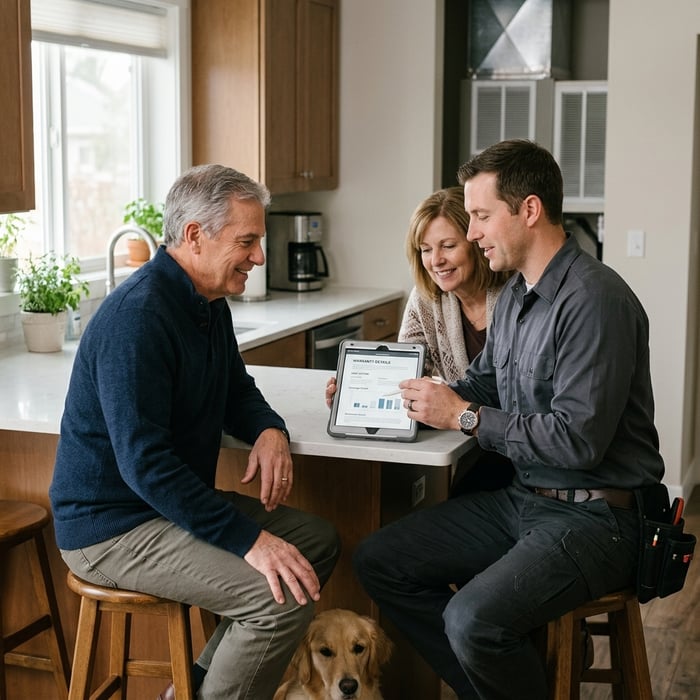
Your technicians are your best salespeople. Train them to explain warranty benefits in plain language during the install or service visit. A simple line like "This plan covers everything—parts and labor—for the next 10 years, even if you sell the house" is more effective than a brochure.
Use Real-World Scenarios
Homeowners respond to examples they can see themselves in. Try: "If your compressor goes out in year five, you're looking at $1,200 out of pocket without coverage. With this plan, you pay nothing."
Connect with Real Estate Professionals
Reach out to local agents and let them know about your transferable warranty program. It gives them something valuable to mention during transactions, and it positions your company as the go-to contractor in the area. For more on building your HVAC sales approach, see our guide on HVAC sales strategies for business growth.
How to Structure an HVAC Technician Bonus Program for Selling Extended Warranties
Your technicians are in the best position to sell warranties—but they need the right motivation and support. A structured incentive program turns warranty sales from an afterthought into a consistent revenue driver.
Keep It Simple
A flat bonus per warranty sold is the easiest structure to manage and the most motivating for techs. For example:
- $25–$50 per warranty sold on standard residential installs
- $75–$100 per warranty sold on premium or commercial systems
- Monthly or quarterly bonus tiers for hitting sales targets (e.g., 10+ warranties = additional $200 bonus)
Track and Recognize Performance
Use your CRM or service management software to track warranty sales by technician. Share results weekly. Public recognition—even a simple leaderboard—drives healthy competition.
Provide Sales Training
Don't just tell techs to sell warranties. Show them how. Run short training sessions (15–20 minutes) that cover:
- How to bring up the warranty naturally during a service call
- Key talking points (parts and labor coverage, transferability, no out-of-pocket costs)
- How to handle objections ("We already have the manufacturer warranty" → "That only covers parts. This covers everything.")
Remove Friction
Make the warranty easy to add. If the process takes more than a few taps on a tablet or a quick line on the invoice, techs will skip it. Work with your warranty provider to streamline the enrollment process so it fits into your existing workflow.
Frequently Asked Questions About Transferable HVAC Extended Warranties
Do transferable HVAC warranties cover both parts and labor?
It depends on the plan. Manufacturer warranties typically cover parts only. Extended warranties from providers like JB Warranties cover both parts and labor for mechanical breakdowns, protecting homeowners from unexpected repair costs and ensuring your team gets compensated for service work.
How long do transferable HVAC warranties typically last?
Manufacturer warranties cover parts for 5 to 10 years, with labor usually limited to 1 to 2 years. Extended warranty plans add 2 to 10 additional years of coverage. When the home sells, the remaining term transfers to the new owner without resetting.
Are there any fees involved in transferring an HVAC warranty?
Policies vary. Some providers charge $25 to $75 in administrative fees. JB Warranties offers plans that transfer free of charge. In Florida, manufacturer warranties must now transfer automatically at no cost under Statute 559.956, effective July 2024.
How can I market transferable HVAC warranties to homeowners effectively?
Lead with protection, not price. Build the warranty into your initial quote rather than treating it as an add-on. Train technicians to explain benefits during service calls using real-world cost scenarios. Connect with local real estate agents who can refer homeowners your way.
What are the advantages of offering transferable HVAC warranties?
They increase your average ticket size, build customer trust, reduce callback disputes, lock in long-term service relationships, and give homeowners a tangible selling point when they list their home. For contractors, they turn every job into a recurring revenue opportunity.
How to structure an HVAC technician bonus program for selling extended warranties?
Start with a flat per-sale bonus ($25–$100 depending on system type), add monthly targets with tiered bonuses, track performance by technician, and invest in short training sessions that teach field-friendly talking points and objection handling.
Turn Every Job into a Long-Term Relationship
Transferable HVAC extended warranties give you something most contractors don't have: a reason for the next homeowner to call you first. They protect your customers, strengthen your reputation, and create revenue that lasts well beyond the initial install.
The contractors growing fastest right now aren't just doing great work—they're offering coverage that travels with the home and keeps their name on every service call for years to come.
Ready to add transferable warranty plans to your business? Become a JB Warranties dealer and give your team the tools to close more jobs, increase ticket sizes, and build lasting customer relationships.


Jenna Ochoa
Vice President - Claims, JB Warranties