



An uninsulated hose bib doesn't look like much of a problem in October. By January, it's a burst line, a soaked drywall bay, and a homeowner who's furious that nobody mentioned this back when the weather was still decent. Plumbing winterization services close that gap — and for most companies, they're sitting unsold on the table every single fall.
The pitch here isn't complicated. Winterization is cheap prevention work that fills a slow stretch on the schedule, heads off a chunk of emergency freeze calls that would otherwise eat January and February, and gives techs a natural reason to be back in a customer's home before the next big-ticket job comes up.
Why Winterization Belongs on the Fall Service Menu
Fall sits in an awkward spot for many plumbing companies. The big seasonal push is over, winter's freeze-call surge hasn't started yet, and the schedule has room for a proactive service like this.
The cost of skipping it isn't small, either. Michigan's statewide winter-readiness program puts the number at roughly a quarter-million U.S. homes seeing pipe-freeze damage in a typical winter — and a crack as small as an eighth of an inch can release up to 250 gallons of water a day once a frozen line finally gives. That's the kind of claim a homeowner remembers for years, and usually blames on "nobody warned me."
The risk skews worse in mixed-climate regions, where homes get built assuming the occasional hard freeze rather than a full winter of them. Pipes end up running through attics, and exterior walls with a lot less protection than a house built for real cold gets as standard.
What Actually Goes Into a Winterization Visit
Keep the scope tight. This isn't a full home energy audit — it's a focused, repeatable visit built around the spots that freeze first.
Pipe Insulation in the Vulnerable Spots
Exposed supply lines in attics, crawl spaces, garages, and unheated basements are where a hard freeze does its damage. The Home Projex guidance on winter pipe protection notes that vulnerability depends heavily on where a pipe runs and how well it's already wrapped — which is exactly the kind of site-specific judgment a licensed tech is positioned to make and a homeowner isn't.
Spigots, Hose Bibs, and Irrigation Shutoff
Disconnect hoses, shut the interior valve feeding each exterior spigot, and drain the short run of pipe just inside the wall. Irrigation is its own step: sprinkler lines hold standing water that needs to be forced out with compressed air, not just insulated. Some plumbing companies handle blowouts in-house; others partner with a local irrigation specialist and still sell the whole package as one coordinated visit.
Pricing It Like a Real Line Item
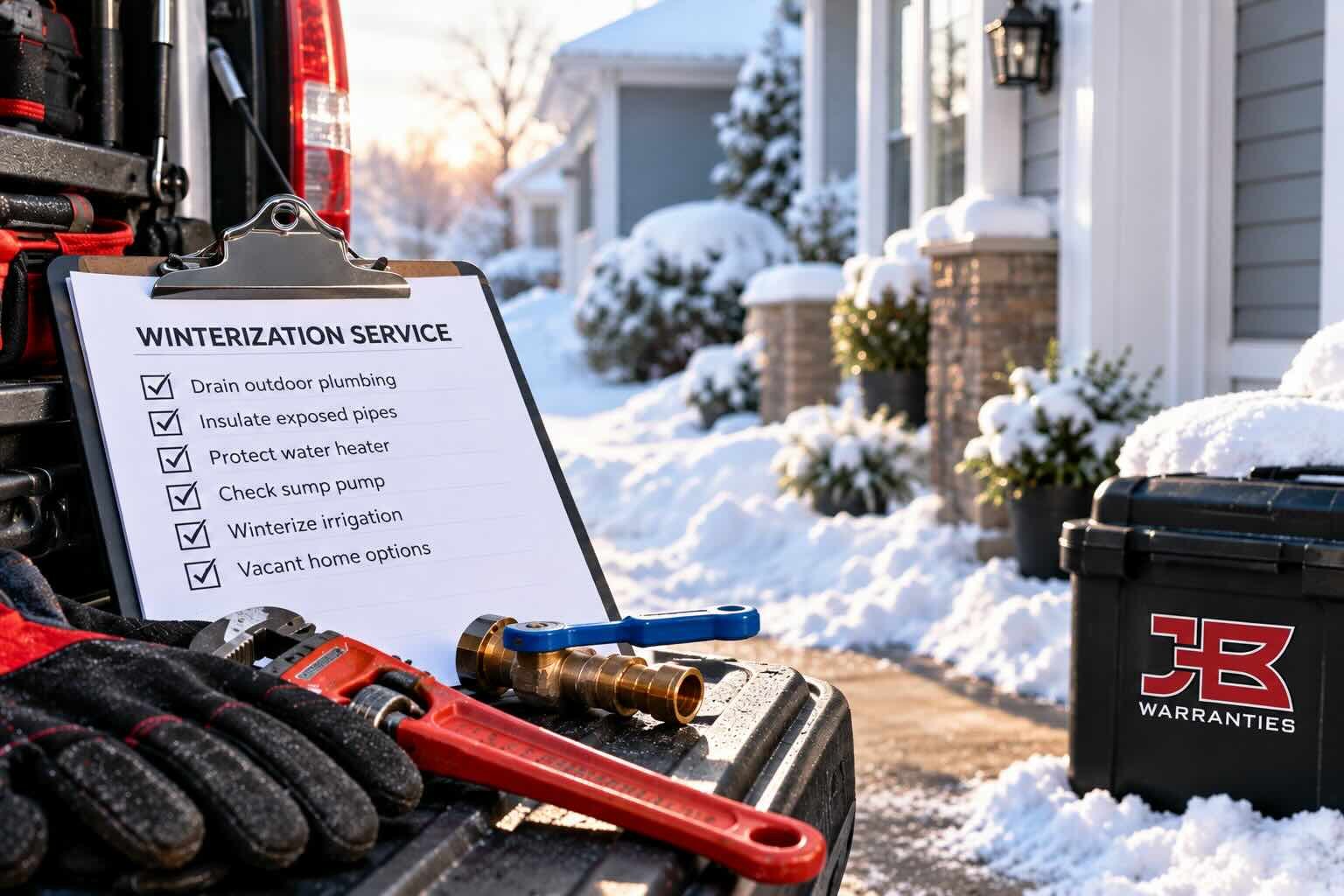
The fastest way to undersell winterization is folding it into a maintenance visit for free. Treat it instead as its own line item — a flat fee for a standalone visit, or a perk baked into a maintenance membership plan that still shows up as a real dollar value on the invoice.
There's a candid piece of this worth saying plainly: no amount of insulation stops every freeze. A hard enough cold snap, especially one that knocks out power along with it, can still get through. The pitch isn't "guaranteed protection." It's meaningfully lower odds, at a price that's a lot easier to swallow than a $15,000 water damage repair.
If you work in an area where homeowners leave their homes vacant during the winter to spend the season in warmer climates, make sure your winterization plan includes options tailored for vacant homes. Emphasizing the extra precautions that protect their property and prevent costly damage can be a powerful motivator for homeowners to request winterization services. Groundworks highlights several key steps to ensure a home is properly winterized before the homeowner heads south.
Protecting the Equipment You Touch While You're There
A winterization visit almost always puts a tech's hands on a water heater, a tankless unit, or the lines feeding one — checking insulation, confirming the unit isn't sitting in an unheated garage without protection, sometimes flushing sediment while the access panel is already open. The tech takes care of the items mentioned above and also highlighted in the Ultimate Guide to Winterizing Your Water Heater: Expert Tips.
That's the same logic JB Warranties has applied to other add-on service lines: when a visit touches equipment that's already covered, or could be, it handles the labor risk on a future callback before it happens. JB Warranties' plumbing warranty plans cover water heaters, tankless units, boilers, and water treatment systems, with reimbursable labor rates up to $300 an hour, no deductible, and free transfer to a new homeowner if the property sells. None of that covers water damage from a burst line — that part stays a homeowner's insurance claim — but it does mean the equipment itself isn't an open liability every time a tech is back in the house for a seasonal visit.
Getting the Offer in Front of Customers Before the First Freeze
Timing matters more than the pitch itself. A short email or text to the existing customer list in early September, timed loosely around the first cold-weather forecast of the season, outperforms anything sent after temperatures have already dropped — by then, a homeowner is calling around for someone to fix a frozen pipe, not schedule prevention.
Techs already on-site for a fall maintenance call are in the best position. An uninsulated spigot or an exposed line under a crawl space is easy to point to and easy to say yes to on the spot, especially compared to a cold-outreach pitch landing in an inbox weeks later.
Ready to add a covered plumbing line to your winterization offer? Become a Dealer → JB Warranties backs the water heaters, tankless units, and boilers a winterization visit already touches, so the labor risk on a future callback doesn't fall back on the crew.
Frequently Asked Questions
What does a plumbing winterization service typically include?
Most visits cover insulating exposed pipes in attics, crawl spaces, and garages; disconnecting hoses and shutting off exterior spigots; and blowing out irrigation lines where a sprinkler system is present. Many contractors also add a quick check on the water heater and any exposed supply lines behind appliances, since those spots freeze first in a hard cold snap.
When should contractors start offering winterization services?
Early fall, before the first hard-freeze warning goes out. Waiting until temperatures drop puts a company in reactive mode, competing with every other freeze call on the board. Pitching it in September or October, alongside fall maintenance visits, lets the crew work through the customer list on a normal schedule instead of an emergency one.
How should a winterization visit be priced?
Most companies charge a flat fee for a standalone visit or fold it into a maintenance membership plan as a named perk. Pricing it too low undersells the prevention work involved — a homeowner who's already paid for one expensive freeze claim is usually glad to pay for peace of mind the second time around.
Does an extended service agreement cover damage from a frozen pipe?
No. Coverage applies to mechanical breakdown labor and parts on the equipment itself — a water heater or boiler, for example — not water damage from a burst line, which stays a homeowner's insurance claim. Where it does help: if winterization work touches covered equipment and that unit fails later in the agreement term, the labor callback is already paid for.
What's different about winterizing a vacant property versus an occupied home?
A vacant home needs the water supply shut off completely and the system drained, since there's no one there to catch a slow leak or keep a faucet dripping for protection. Occupied homes can usually rely on insulation, sealed drafts, and a thermostat that doesn't dip below the mid-50s overnight.
How can contractors market this before the first freeze hits?
A short email or text blast to the existing customer list works well in early fall, timed around the first cold-weather forecast of the season. Techs already on-site for a fall maintenance call are well positioned to point out an uninsulated spigot or exposed line and offer the add-on directly, rather than waiting on a separate marketing push.
Do irrigation systems need a separate blowout from general pipe winterization?
Yes. Irrigation lines hold standing water in a way indoor plumbing doesn't, and that water needs to be forced out with compressed air before a freeze rather than just insulated. Some plumbing companies handle blowouts in-house; others partner with a local irrigation specialist.

Tommy Cue
Vice President of Strategic Partnerships at JB Warranties