



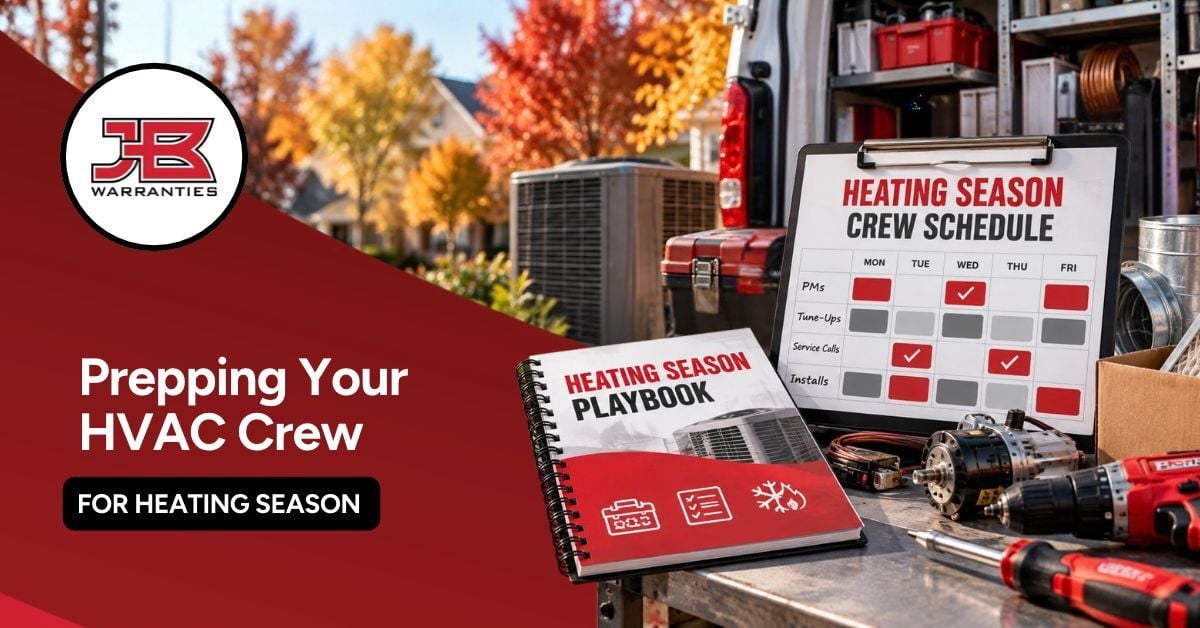
The first hard freeze doesn't ease in. One morning the thermometer drops, furnaces that limped through fall finally quit, and the phone starts ringing before the office even opens. Contractors who staged their crew for it answer every call. Contractors who didn't spend the next six weeks apologizing for a three-day wait.
A Scheduling Playbook for Contractors
Heating season rewards the shops that scheduled ahead of the rush, not during it. A crew that's stretched thin doesn't just lose jobs to competitors who pick up the phone faster — it burns through techs, racks up overtime, and turns routine no-heat calls into late-night emergencies nobody planned for. None of that is inevitable. It's a scheduling problem, and scheduling problems have fixes.
This isn't about working the crew harder. It's about knowing what the crew can actually handle before the calls hit, and building a schedule that bends instead of breaks when they do. (If you're squared away on staffing but still working through the equipment side of the season, the fall parts and inventory checklist covers that ground.)
Why Heating Season Breaks Schedules That Worked Fine in October
Shoulder season is forgiving. Call volume is steady, techs have breathing room between jobs, and a scheduling hiccup here or there doesn't cascade into a bad week.
Heating season doesn't work that way. No-heat calls are same-day by definition — nobody waits a week for furnace service in January — which means every emergency call bumps something else. A tech who was comfortably booked with three appointments a day in November can suddenly be juggling five, with two urgent enough to reroute everyone behind them.
The shops that struggle most aren't understaffed. They're unprepared. They built a schedule for a normal week and got hit with a heating-season week.
Start With an Honest Count of What Your Crew Can Actually Handle
Before you can build a schedule that survives the rush, you need a real number for how much work your team can absorb on a bad day, not a good one.
That means accounting for each labor category separately: full-time techs, part-timers, installers who can be pulled into service work in a pinch, and apprentices who can handle simpler calls but shouldn't be sent out solo on a complex no-heat diagnosis. Field service companies employ a mix of full-time techs, part-time technicians, installers, sales specialists, and apprentices, and each employee needs a clear understanding of their job status and how they'll be scheduled going into the season.
Skipping this step is how shops end up double-booking on paper and scrambling in the field. Get the honest count first. Everything else in this piece assumes you have it.
Build the Schedule Before the Rush Hits, Not While It's Happening
A tentative schedule released weeks in advance does something a same-day schedule can't: it gives techs a heads-up on their workload and gives dispatch room to make good calls instead of desperate ones. Established scheduling practices let a business release a tentative schedule to the field team four to six weeks in advance, giving dispatchers a foundation to make actionable adjustments as scheduling curveballs come in.
Inside that schedule, sort incoming calls by urgency and geography rather than first-come-first-served. A tech zig-zagging across town all day burns fuel and hours that could've gone to another job. Clustering by area and matching skill level to job type — sending the apprentice on the filter swap, not the compressor failure — keeps the whole crew moving instead of one tech falling behind while another sits idle.
Morning slots fill fastest during heating season. Consider reserving them for scheduled maintenance and pre-booked work, then leaving afternoon capacity open for same-day no-heat calls. It's a small structural choice that keeps emergency work from constantly displacing appointments you already promised.
Decide Your Overtime and Temp-Help Rules Before You're Forced Into Them
Every contractor eventually has to choose between overtime and temporary help to cover the surge. Both come with tradeoffs. Temporary help can be less reliable, and demanding overtime hours can drive higher turnover — so whichever you lean on, the technicians working it need to know the plan isn't indefinite.
One practical approach: set a defined "blackout" window for time off during the heaviest weeks of the season, communicate it at hiring, and reinforce it well before the freeze hits — not the week of. Making the policy clear at the time of hiring and reinforcing it throughout the year, with emergencies exempted, keeps the busy stretch functioning as an all-hands period without creating resentment. Techs who know the rules in October don't feel blindsided in December.
Pair the policy with something concrete for the people carrying the extra load. A stipend, a bonus tied to on-time completion, or even a clear path to more responsibility next season goes further than vague appreciation. Techs remember who asked them to grind through the rush with nothing to show for it.
A Callback During Peak Season Costs More Than It Looks Like

Every hour a tech spends redoing a job that should've been right the first time is an hour not going toward a paying call during the exact stretch when every hour counts most. Callbacks are annoying in March. In January, they're a scheduling emergency.
This is where labor coverage does more than protect the homeowner. A callback covered under an active extended labor warranty doesn't turn into a fee dispute or a from-scratch diagnostic visit — it's a documented repair the crew can move through quickly, without the back-and-forth that eats a technician's afternoon. Program terms allow up to 30 days for claims processing once all required documentation is in, though the claims team has been mailing approved checks within 14 days this year — a pace that matters most during the exact weeks when every hour of tech time is spoken for.
Give Dispatch the Tools to Match the Right Tech to Every Call
A whiteboard and a group text can survive shoulder season. Heating season exposes every crack in that system fast. Dispatch software that shows real-time tech location, skill tags, and job status lets a scheduler make a fast, accurate call instead of guessing who's closest and hoping they're qualified. Modern scheduling software allows dispatchers to see a tech's real-time location relative to a job site to route emergency calls efficiently, with a dispatch board that tracks alerts, scheduled jobs, unassigned jobs, and jobs in progress in one place.
This doesn't need to be complicated. It needs to answer one question fast, over and over, all day: who's closest, who's qualified, and who has room. Whatever tool gets you that answer in seconds instead of minutes during the rush is worth the setup time before the rush starts.
Use the Lulls Inside a Busy Season, Not Just the Slow Months
Even inside heating season, there are pockets of quiet — the stretch between the first freeze and the deep-cold weeks that follow, or a mild spell that thins the call volume for a few days. Some contractors use these windows for planned training, scheduling well over a hundred hours of it across the year, taught in-house by senior technicians or brought in from outside trainers for newer topics — and techs who know they're improving on steady pay are more likely to stay.
It's a small habit with a real payoff. A tech who spent a slow Tuesday reviewing a newer heat pump control board is faster and more confident the next time that exact unit shows up on a Friday-afternoon emergency call.
The Differentiator Isn't the Schedule. It's What the Schedule Protects.
None of this changes what heating season is: unpredictable, front-loaded with urgency, and unkind to shops that wing it. A solid crew schedule keeps unpredictability from becoming chaos — and keeps techs from burning out three weeks into a two-month rush.
Contractors who pair disciplined scheduling with dealer benefits built for exactly this kind of season — training support, program resources, and a warranty structure that keeps callback work from eating into billable hours — tend to come out of the rush with their crew intact and their customers still answering the phone the next time they call.
Frequently Asked Questions
How far in advance should an HVAC contractor build a heating season crew schedule?
Most shops start planning 4 to 6 weeks before the first expected cold snap in their region. That gives enough lead time to release a tentative schedule to the team, set overtime and blackout policies, and adjust staffing before call volume spikes rather than scrambling once it does.
Should I hire seasonal help or rely on overtime during the heating rush?
It depends on your crew's tolerance for extra hours and your local labor market. Overtime keeps work with techs who already know your systems and customers, but it raises burnout risk over a long season. Temporary help adds capacity fast, though training time and reliability can be inconsistent. Many contractors use a mix, leaning on overtime for the first surge and temp help if the rush extends.
What's the best way to handle emergency no-heat calls without blowing up the whole day's schedule?
Reserve a block of time, usually afternoons, that stays open for same-day emergencies instead of pre-booking it with routine maintenance. Categorizing calls by urgency before they're assigned also helps dispatch avoid reshuffling the entire board every time a no-heat call comes in.
How do I reduce technician burnout during peak heating season?
Set overtime expectations and time-off blackout windows well before the season starts, so nobody feels blindsided. Concrete incentives — a stipend, a bonus tied to completion rates, or a clear path to added responsibility — matter more than general appreciation. Building in short training windows during lulls also gives techs a mental break without losing productive time entirely.
Does scheduling software actually help during the busiest weeks, or is it overkill for a small crew?
Even a two- or three-tech shop benefits once call volume gets unpredictable. The value isn't the software itself — it's having a fast, accurate answer to "who's closest and qualified" instead of guessing. Smaller crews can usually get by with simpler dispatch tools; larger ones see the biggest gains from real-time location and skill tracking.
How does an extended labor warranty affect crew scheduling during heating season?
Callbacks are expensive any time of year, but during peak season they cost a technician's hours that could've gone to a paying call. Labor coverage on eligible repairs turns a callback into a documented, quick-moving job instead of a drawn-out dispute. Program terms allow up to 30 days for claims processing once all required documentation is received, though this year's claims team has been mailing approved checks within 14 days — full details are on JBW's FAQs page.
What should I do with my crew during the quieter stretches inside heating season?
Use them for training rather than treating them as downtime to fill. A short refresher on a newer piece of equipment or a control board techs haven't seen much pays off the next time that unit shows up on an emergency call. It also signals to techs that the company invests in them, which supports retention during the grind of a long season.
Ready to add JB Warranties to your offering?
A crew that isn't losing hours to callback disputes has more hours to work the rush.

Brian Bohannan
Vice President of Sales at JB Warranties