


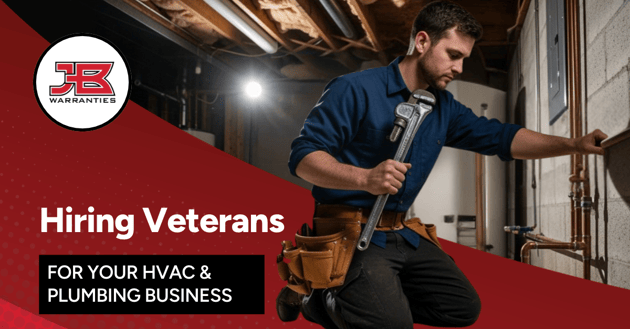
HVAC and plumbing contractors know the hiring challenge all too well. Calls keep coming in, schedules fill up, and finding enough qualified techs is a constant struggle. With Veterans Day this week, it’s worth taking a closer look at a group of candidates many contractors miss.
There’s no shortage of potential. The U.S. Bureau of Labor Statistics reports 17.3 million veterans in the country in 2025, including 5.6 million from the Gulf War-era II (September 2001 to present) alone. Each year, more veterans transition out of service looking for steady, hands-on work in a structured environment. That matches what a well-run service business offers.
Why Veterans Are a Great Fit for the Trades
Military experience is built on procedure. Veterans are trained to follow checklists, document their work, and flag issues before they turn into bigger problems. Those habits carry over to tasks like refrigerant recovery, gas line repairs, or backflow testing.
A veteran's attention to safety-related concerns is another reason they may be a great fit for your business. Veterans are used to environments where shortcuts can hurt someone, so lockout/tagout, PPE, and jobsite awareness often feel familiar rather than imposed. For an owner, that means fewer callbacks tied to sloppy work and a lower risk profile on every job.
Plenty of veterans have hands-on experience with equipment. Whether it was vehicles, generators, or base facilities, many handled maintenance every day. While their background may not match residential HVAC or plumbing exactly, they often already have the mechanical skills.

What Veterans Bring to a Customer-Facing Business
Technical skill is just one part of the job. The rest shows up in the customer’s kitchen. Veterans usually arrive on time, communicate clearly, and stay calm when customers are upset. Those habits protect your reputation and keep customers coming back.
Leadership is another plus. Many veterans have managed small teams in the service, which makes them strong candidates for lead tech, field supervisor, or training roles once they learn your systems. If you’re building a clear path for new hires, the HVAC apprenticeship roadmap from the JB Warranties blog offers a framework that fits well with a veteran hiring push.
Where to Find Veteran Candidates
Posting on general job boards and waiting for veterans to apply rarely works. Instead, focus on the places where transitioning service members are already searching.
- Your state workforce agency. American Job Centers often have staff dedicated to veteran employment who can connect you with local candidates.
- The Department of Defense SkillBridge program. SkillBridge lets service members in their final months of duty train with civilian employers. For employers, it is a chance to train and evaluate a candidate before they separate.
- Nearby installations and veteran service organizations. Base transition offices and local veteran groups host hiring events and maintain informal networks of people seeking work.

When writing a job posting, clearly state the skills you need. List out tasks like electrical troubleshooting or safe work around gas lines, instead of relying on job titles that may not mean much to a veteran.
Use the GI Bill to Support Training
Training costs are a common concern for owners hiring people without trade experience. GI Bill benefits can help bridge that gap. Under the VA’s on-the-job training and apprenticeship program, eligible veterans in fields like plumbing can get a monthly payment from the VA while earning a wage from their employer.
First, the VA must approve your training program before a veteran can use benefits, and trainees usually sign a training agreement for a set period. Starting the paperwork early pays off. A veteran who can supplement a starting wage with VA support is more likely to stick with the job through the learning curve.
A Note on the Work Opportunity Tax Credit
The Work Opportunity Tax Credit (WOTC) has long rewarded employers for hiring qualified veterans, including disabled veterans. Both the IRS and the Department of Labor list the credit as authorized through December 31, 2025. Before you count it in a 2026 hiring budget, confirm its current status with the IRS or your tax advisor.
Onboarding That Keeps Veteran Hires
Recruiting a veteran is just the start. Retaining them depends on the first 90 days. Veterans often leave civilian jobs that feel disorganized or lack direction, so structure is your advantage.
Give every new hire a written training plan with clear milestones. Pair them with a senior tech who teaches, not just assigns tasks. Show them what it takes to run calls solo, earn a certification, or move into a lead role. The same principles work across generations, and the Gen Z technician recruiting playbook covers mentorship and career-path tactics that fit veteran hires too.
Recognition supports both retention and recruiting. The Department of Labor’s HIRE Vets Medallion Program is the only federal award for employers who recruit, hire, and retain veterans. Check the current criteria on the program’s site to see if your business qualifies.
Give New Technicians a Clear Offer to Present
Veterans appreciate a clear process, and many new techs need support on the sales side of service work. Extended Service Agreements give technicians a straightforward way to offer long-term protection on every installation, support revenue per job, and keep customers loyal to your business.
JB Warranties supports HVAC and plumbing contractors with trade-focused Extended Service Agreements. Becoming a dealer gives your team access to these programs and a clear way to talk about coverage with customers. If you’re adding veterans to your crew this year, JB Warranties can help your new technicians present a proven offer in every home.
Frequently Asked Questions
Why are veterans a good fit for HVAC and plumbing jobs?
Veterans are trained to follow procedures, work safely, and communicate clearly under pressure. Many also maintained equipment while in service. Those habits carry over well to field service, where precision and customer trust drive repeat business.
Can veterans use GI Bill benefits for HVAC or plumbing training?
Yes. The VA's on-the-job training and apprenticeship program lets eligible veterans receive a monthly payment while they train and earn wages with an employer. The employer's training program must be approved by the VA first.
Is the Work Opportunity Tax Credit available for veteran hires in 2026?
The IRS and the Department of Labor list the Work Opportunity Tax Credit as authorized through December 31, 2025. Confirm its current status with the IRS or a tax advisor before relying on it for new hires.
Where can HVAC and plumbing contractors find veteran job candidates?
Start with your state workforce agency and local American Job Centers, which often have veteran employment staff. The Department of Defense SkillBridge program, base transition offices, and veteran service organizations are also strong sources.

Brian Bohannan
Vice President of Sales at JB Warranties