



Last updated: April 30, 2026
Every experienced plumber has a favorite pipe. Some swear by copper for its longevity. Others won't run a residential job without PEX. CPVC still has a loyal following for straight runs and chlorine-heavy water systems. The reality is that there's no single "best" plumbing material — only the right material for the project, the climate, and the customer in front of you.
This guide breaks down how PEX, CPVC, and copper actually perform in the field, what the trade-offs cost (or save) on a typical job, and how to match the material to the work. If your team is debating PEX vs. CPVC on a re-pipe, or weighing copper for a new construction project, this is the contractor's framework for making the call with confidence.
COMPARISON TABLE: PEX vs. CPVC vs. Copper at a Glance
| Feature | Copper | CPVC | PEX |
|---|---|---|---|
| Material type | Metal | Rigid thermoplastic | Flexible thermoplastic |
| Typical lifespan (proper install) | 50+ years; often longer in good water conditions | 50+ years | 50+ years |
| Flexibility | Bendable but rigid; needs joints | Rigid; ~18" minimum bend radius | Highly flexible; can bend as tight as ~3.5" for ½" tubing |
| Connection method | Soldered joints (heat required) | Solvent cement (cure time required) | Crimp, clamp, or expansion fittings (no heat or glue) |
| Cold-weather installation | Standard | Cure time may extend to 24 hours in cold conditions | No weather sensitivity |
| Freeze resistance | Susceptible to bursting | Brittle in freeze-thaw cycles | Expands without bursting in most freeze events |
| UV exposure | Resistant | Better than PEX, but still degrades outdoors | Poor; degrades quickly with direct sunlight |
| Chlorine resistance | High | Inherently resistant | Reduced performance with high chlorine + high temperature |
| Material cost | Highest | Lowest | Mid-range, but fittings are more expensive than CPVC |
| Building code acceptance | Universal | Widely accepted | Widely accepted; a few jurisdictions have restrictions |
When the Project Drives the Material Choice
Before you can pick a pipe, you need a clear read on the job. The same plumber who'd default to PEX in a residential re-pipe might reach for copper on a multifamily new build or CPVC in a school retrofit. Material choice usually comes down to project type, water conditions, and the realities of the install environment.
The PEX vs. CPVC vs. copper decision shows up most often on:
- Replacing aging galvanized supply lines — older homes with corroded zinc-coated pipe need a full repipe, and the choice usually comes down to PEX flexibility vs. copper longevity
- New residential construction — where labor cost, install speed, and code compliance drive the math
- Re-pipes and retrofits — where running new pipe through finished walls makes PEX's flexibility a major advantage
- Radiant floor heating systems — where PEX's flexibility and temperature tolerance make it a near-default choice
- Outdoor or unprotected runs — where UV exposure rules out PEX without protective sleeving
- Light commercial or multifamily projects — where copper's longevity and pressure consistency may justify the higher upfront cost
The point is to start with the project, not the preference. Below is what each material actually delivers when it's the right fit.
Copper Piping: Time-Tested Durability at a Premium Price

Copper has been the default for residential water lines since the 1930s, and its durability is the reason it survived the rise of plastic alternatives. With a melt point near 1,981°F, copper handles fire and seismic events better than any thermoplastic. It resists bacterial growth, doesn't leach contaminants into potable water, and is accepted by every U.S. plumbing code without question. For projects where long-term reliability is the primary requirement, copper is still the benchmark.
The drawbacks are mostly economic. Copper is the most expensive plumbing material on the truck, and installation is labor-intensive — every joint requires soldering by a qualified tech. Copper installations also take longer than PEX or CPVC equivalents, which adds up on labor-heavy projects. Copper is also vulnerable to pinhole leaks in homes with high-pH water, water softener systems, or aggressive chloramine treatment.
Pros
- ✓ Proven track record over decades in residential and commercial systems
- ✓ Fire-resistant, earthquake-tolerant, and accepted by all building codes
- ✓ Doesn't support bacterial growth or release contaminants into potable water
- ✓ Bendable to reduce joint count, with high internal working pressure ratings
Cons
- ✘ Highest material cost of the three options
- ✘ Most labor-intensive installation; requires skilled soldering
- ✘ Susceptible to pinhole leaks with high-pH water or aggressive water treatment
- ✘ Some homeowners report a metallic taste in drinking water
- ✘ Subject to thermal loss; often requires insulation on hot water lines
CPVC Piping: Affordable, Chlorine-Resistant, and Fast on Straight Runs
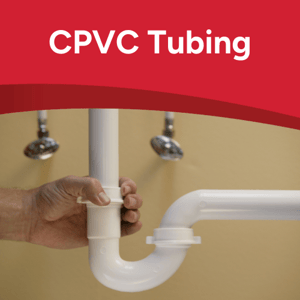 CPVC (chlorinated polyvinyl chloride) sits in the middle of the price-and-performance spectrum. It costs less than copper, installs faster than copper, and handles potable hot and cold water reliably. The chlorine in its molecular structure makes it inherently resistant to chloramine-treated municipal water, which gives it a real edge in regions where chlorine attacks PEX over time.
On straight-run installations, CPVC can actually beat PEX on install speed because rigid pipe runs faster when fewer fittings are needed. The catch is the connection process: CPVC uses solvent cement, which means proper ventilation, dry conditions, and patience for cure time — sometimes up to 24 hours in cold weather before pressure testing. That weather sensitivity can wreck a tight schedule on a winter job. Because CPVC installs without torches or solder, you can also send less experienced techs to a CPVC job than you'd put on a copper run, which gives you more flexibility in crew dispatching and scheduling.
CPVC also has chemical sensitivities that PEX doesn't. Contact with certain caulks, electrical wire insulation, solder flux, spray foam insulation, or termite treatment chemicals can cause it to degrade. That means coordinating carefully with other trades during installation.
Pros
- ✓ Lowest material cost among the three options
- ✓ Inherently chlorine-resistant — performs well with high-chlorine municipal water
- ✓ Self-insulating; minimal thermal loss compared to copper
- ✓ Faster than copper on most installations; competitive with PEX on straight runs
- ✓ Safe for potable water and rated for hot water service
Cons
- ✘ Brittle in freeze-thaw cycles; not suitable for unheated spaces in cold climates
- ✘ Solvent cement requires cure time and can stall jobs in cold or humid weather
- ✘ Sensitive to certain construction chemicals (caulks, foams, treatments)
- ✘ Different outer diameter than copper or PVC, which complicates retrofits
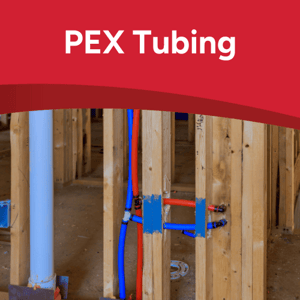
PEX (cross-linked polyethylene) — one of the newest plumbing materials in widespread residential use — has rapidly become the most common plumbing material in North American residential construction, and the reasons are practical: it bends, it freezes without bursting, and it installs without torches, glues, or solvents. PEX can handle a bend radius as tight as 3.5" on ½" tubing, compared to roughly 18" for CPVC. That flexibility means fewer fittings, fewer potential leak points, and faster rough-in work — especially on retrofits where you're snaking pipe through finished walls.
The connection systems (crimp, clamp, or expansion) work in any weather and don't require cure time, which keeps cold-weather and high-humidity jobs on schedule. PEX is also remarkably forgiving in freeze events: it expands rather than bursting, which makes it the practical choice for unheated spaces, vacation homes, and seasonal properties.
The trade-offs are real, though. PEX fittings reduce the internal diameter at every joint, which causes a measurable pressure drop that adds up across a system with many fixtures. PEX is also UV-sensitive — even a month of direct sunlight exposure can shorten its service life — so it's not suitable for outdoor or exposed runs without protective sleeving. And in regions with high chlorine levels and high water temperatures, PEX can degrade faster than CPVC. Rodents have also been known to chew through it in vulnerable areas like crawlspaces.
Pros
- ✓ Highly flexible; reduces fitting count on complex layouts
- ✓ Freeze-resistant — expands without bursting in most freeze events
- ✓ No torches, no glue, no cure time; installs in any weather
- ✓ Lower material cost than copper, with faster installation than copper or CPVC on retrofits
- ✓ Resistant to corrosion and scale buildup
Cons
- ✘ UV-sensitive; not suitable for outdoor or exposed runs without sleeving
- ✘ Pressure drop at fittings can affect flow on multi-fixture systems
- ✘ Performance degrades with high chlorine levels and elevated temperatures
- ✘ Vulnerable to rodent damage in crawlspaces and unfinished areas
- ✘ Specialized crimping or expansion tools represent an upfront cost
The Contractor's Vedict: Matching Material to the Job?
After all the comparisons, the call usually comes down to a few practical questions: What's the climate? What's the water like? What's the project type? Here's a quick decision framework your team can use in the field.
Recommend Copper When
- Long-term reliability is the customer's top priority
- The project is a high-end new build, multifamily, or commercial system
- Local water chemistry is mild and won't trigger pinhole corrosion
- Budget allows for the higher material and labor cost
Recommend CPVC When
- The project is mostly straight runs (large new builds, multi-story re-pipes)
- The local water has high chlorine levels that would shorten PEX service life
- Material cost is a primary driver and the climate is mild
- Cure time and weather sensitivity won't disrupt the schedule
Recommend PEX When
- The project is a retrofit or re-pipe through finished walls
- The system runs through unheated spaces or freeze-prone areas
- Speed of installation matters more than fitting cost
- Layout requires tight bends or complex routing
Protect Your Installations and Your Reputation
Even the best material, installed by the best technician, can fail. Manufacturing defects, unexpected water chemistry, freeze events that exceed the material's tolerance, or simple wear over time can all bring you back to a job you finished months — or years — ago. When that callback comes, the question isn't whether you'll handle it. It's whether the cost lands on you, the manufacturer, or a warranty partner.
This is where extended labor warranties earn their place in a plumbing contractor's business model. A well-installed PEX, CPVC, or copper system is built to last 50+ years. But the labor to fix a covered breakdown — the part of the job that manufacturer warranties almost never cover — is what eats into margin when something does go wrong.
JB Warranties' extended warranty solutions for plumbing contractors cover all of today's top plumbing brands, with parts and labor protection, fast claims, and transferable plans your customers actually value at resale. To talk through which plan fits your business, schedule a meeting with a JB Warranties representative. And for related installation guidance, see our piece on the benefits of installing a water filtration system — another margin opportunity worth pairing with extended coverage.
For broader industry context on how plumbing material choices are shifting in 2026, Contractor Magazine and Contracting Business regularly publish field reports and contractor surveys worth following.
PEX vs. CPVC vs. Copper: Frequently Asked Questions
Which pipe material is best for cold climates?
PEX is the strongest performer in cold climates because it expands rather than bursting when water freezes. Copper handles cold conditions well but can rupture in hard freezes. CPVC is the weakest in freeze-thaw cycles — it becomes brittle and is prone to cracking, which makes it a poor choice for unheated spaces or regions with harsh winters.
Which pipe material is most resistant to chlorine?
CPVC has the strongest inherent chlorine resistance of the three because chlorine is part of its molecular structure. Copper is also highly chlorine-tolerant. PEX is treated with antioxidants to resist chlorine, but high chlorine levels combined with elevated water temperatures can shorten its service life faster than CPVC or copper.
Which pipe is cheapest to install — PEX, CPVC, or copper?
CPVC has the lowest material cost. Copper is the most expensive because of both material price and labor-intensive soldering. PEX falls in the middle on materials but often wins on total installed cost in retrofits because its flexibility reduces fitting count and labor hours. The right answer depends on project type and crew experience.
Which provides the best water pressure?
Copper and CPVC typically deliver better water pressure than PEX because their fittings have less impact on internal diameter. PEX fittings sit inside the pipe, reducing flow at every joint, which can cause noticeable pressure drops in homes with multiple fixtures running at once. Sizing PEX one diameter larger than equivalent CPVC or copper helps offset this.
Which is safest for drinking water?
All three materials are certified safe for potable water when they meet NSF/ANSI 61 standards. Copper has the longest track record and doesn't leach harmful substances under normal conditions. CPVC is non-permeable and resists biofilm well. Modern PEX-A and PEX-B products are also NSF-certified, though early-generation PEX raised some concerns about taste and chemical leaching.
What's the typical lifespan of each material?
All three materials are engineered for 50+ year lifespans when properly installed and operating within their design conditions. Copper often exceeds that in homes with mild water chemistry. CPVC and PEX hit their service-life targets when protected from their respective weaknesses — chemical exposure for CPVC, UV and high-chlorine conditions for PEX.
Which pipe material is best for retrofits?
PEX is the strongest choice for most retrofits because its flexibility lets you snake new pipe through finished walls, around obstructions, and through tight spaces with minimal demolition. Copper and CPVC both require more joints in complex layouts, which slows the job and adds potential failure points. CPVC may still be the right call when retrofitting straight runs in commercial or multifamily buildings.

Brian Bohannan
Vice President of Sales at JB Warranties