




March and April don't just signal a seasonal shift—it exposes the weak points in your operation. With equipment costs up, margins tighter, and homeowners more careful about big-ticket spending, every missed call, delayed quote, and weak follow-up costs more than it used to.
Spring isn’t downtime. It’s your maintenance window. The phones may slow down, but the pressure doesn’t disappear—it shifts from volume to efficiency. If your process is leaking now, summer won’t save it. Summer will stress-test it. The contractors who come out ahead in 2026 will be the ones who use this window to tighten the system before peak demand hits.
This is the season to patch the bucket: fix the handoff between lead and quote, clean up follow-up discipline, strengthen your digital presence, and reconnect with the jobs that didn’t close the first time. Those are evergreen moves. What makes them more urgent now is simple: every lead is more expensive, every margin is tighter, and every closed job has to work harder for the business.
Tighten Up Your Digital Front Door
When calls slow down, your website becomes more important—not less. Homeowners still go online first, especially when they’re comparing providers before they ever pick up the phone. If your site feels outdated, hard to use, or unclear, that leak starts before your team even has a chance to sell. Start with the basics that directly support conversion:
- Make it easy to contact you fast. Your phone number should be obvious. Your forms should be short. Your service area should be clear. If a homeowner has to dig for the next step, you’re creating friction you can’t afford.
- Make the mobile experience clean and immediate. Most prospects are checking you from their phone, often while dealing with a problem in real time. Tap-to-call, fast load times, and simple navigation matter because convenience often decides who gets the job.
- Show local credibility clearly. Your website should reinforce that you’re established, trusted, and active in the market you serve. Reviews, service-area content, financing information, and proof of professionalism all help reduce hesitation.
- Give people more than one way to reach you. Some homeowners want to call. Others want to submit a form, use chat, or message through social. Make those paths visible and make sure someone is actually monitoring them.
- Use your site to support the sales conversation. Your website should help prospects feel confident before your team ever delivers the quote. Clear service pages, strong FAQs, and practical next steps make the sales process smoother because the homeowner is less confused and more prepared to move.
The goal here is simple: your website should help qualified prospects take action, not just learn your company name. Then, once that lead turns into a sold system, tools like JB Warranties™ and the Premium Protection Plan™ can help remove repair-cost fear and strengthen the close. JB360®, by contrast, fits later in the workflow—supporting warranty purchasing, claims processing, and expiration tracking inside ServiceTitan or Workiz, so your team runs tighter after the sale is made.
Work the Jobs You Already Paid For
Spring is when you go back and recover the revenue sitting in your pipeline. Those unsold quotes from the past 6–12 months? That’s not dead business—it’s delayed decisions.
Some of those homeowners chose a competitor. But a large percentage didn’t choose anyone—they postponed. Maybe the timing wasn’t right. Maybe the price felt high. Maybe they just weren’t ready to deal with it. That hesitation is your second shot.
Start with a simple rule: Every unsold quote deserves a structured follow-up.
- Revisit older quotes with fresh context.
Equipment costs have changed. Availability has shifted. Homeowners who hesitated before may now be more motivated to act before prices climb further or systems fail under summer load. - Adjust the conversation, not just the price.
Don’t lead with discounts. Lead with relevance. Ask what’s changed. Has the system gotten worse? Are energy bills climbing? Is comfort becoming an issue? Meet them where they are now—not where they were when you first quoted. - Create urgency tied to reality.
Spring is the calm before the storm. Position it that way. Waiting until peak season often means longer lead times, limited availability, and higher stress for the homeowner. - Systematize your follow-up process.
This is where most contractors leak revenue. Quotes sit in inboxes, reminders don’t happen, and opportunities fade. Your follow-up shouldn’t depend on memory—it should be part of your workflow.
This is exactly where JB360 earns its place. By integrating directly with solutions like ServiceTitan or Workiz, it helps your team stay on top of warranty opportunities tied to those past installs—tracking eligibility windows, simplifying warranty purchasing, and keeping key follow-ups from slipping through the cracks. Instead of chasing paperwork or missing timing, your team can re-engage homeowners with a clear, confident next step.
And when you re-open that conversation, pairing the equipment with a JB Warranties extended warranty removes one of the biggest objections: fear of future repair costs. That turns hesitation into confidence—and stalled quotes into closed jobs.
Spring doesn’t create new demand. It gives you the time to capture the demand you already earned.
Build Referral Pipelines—Not Just Contacts
Spring is the ideal time to strengthen the relationships that feed your pipeline year-round. Not by collecting business cards—but by building predictable referral channels.
Start by focusing on the people already closest to your ideal customer:
- Real estate agents working with buyers and sellers who need inspections, repairs, or replacements
- Property managers responsible for maintaining multiple systems across units
- Builders and remodelers influencing equipment decisions before installation
- Other trades like plumbers and electricians who are already inside the home
Instead of one-off conversations, create a simple structure:
- Identify 3–5 partners worth investing in
- Define how you can help them first (faster service, priority scheduling, shared insights)
- Make referrals part of your routine—not something you “get around to”
Digital networking matters here too. Stay visible on LinkedIn, engage with local business owners, and reinforce your expertise where your partners spend time.
The goal isn’t more connections—it’s better ones. A handful of strong referral relationships can outperform dozens of cold leads, especially in a year where every opportunity needs to convert.
Turn Your Customer List Into Predictable Revenue
When inbound slows, your existing database becomes your most reliable growth channel. The difference between contractors who struggle in spring and those who stay busy often comes down to one thing: those who actually works their list.
Break it down simply:
- Past customers – Check in, reinforce the relationship, and uncover new needs
- Recent installs – Ensure satisfaction and open the door for referrals
- Warranty holders – Remind them of upcoming expirations and covered service opportunities
- Unsold quotes – Re-engage with updated timing and context
This isn’t guesswork—it’s math.
If you have:
- 1,000 past customers
- Reach 10% of them
- Book 30% into service calls
You’ve just created a steady stream of revenue without spending a dollar on new leads.
The key is consistency. Calls shouldn’t happen when things feel slow—they should be scheduled, tracked, and repeatable.
This is where most teams fall short. Notes get lost. Follow-ups don’t happen. Opportunities slip through. With JB360, warranty status, expiration timelines, and customer touch points are tracked directly within your FSM—giving your team a clear reason to call and a structured way to stay on top of it.
And when those conversations turn into sales opportunities, positioning a JB Warranties Premium Protection Plan helps remove hesitation by giving homeowners confidence in their long-term repair costs—making it easier to move forward now instead of waiting.
Strengthen Your Local Presence Where Decisions Happen
When homeowners search for HVAC or plumbing services, they’re not browsing—they’re deciding. Your visibility in that moment determines whether you’re in the conversation or out of it entirely.
Start with the essentials:
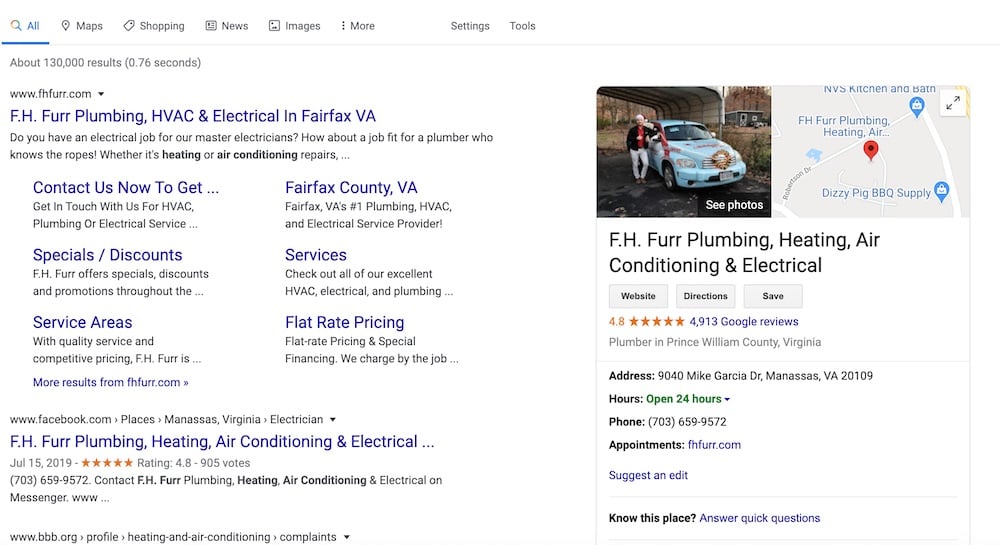
- Optimize your Google Business Profile.
Make sure your information is accurate, your services are clearly listed, and your photos reflect real work—not stock images. - Focus on review quality and consistency.
A steady flow of recent, detailed reviews builds trust faster than anything else. Respond to every review—good or bad—to show you’re active and accountable. - Ensure consistency across directories.
Your business name, address, and phone number should match everywhere. Inconsistencies create confusion and weaken your credibility. - Create locally relevant content.
Service-area pages, blog content tied to regional needs, and community involvement all reinforce your presence in your market. - Earn visibility through real activity.
Sponsorships, partnerships, and local engagement often lead to mentions and links that strengthen your online authority.
The goal isn’t just to “rank”—it’s to be the obvious choice when someone is ready to act. When your online presence is accurate, active, and credible, you reduce friction before your team ever gets involved
Show Up Where AI Is Recommending Contractors (Not Just Where Google Lists Them)
Homeowners aren’t just searching anymore—they’re asking. And increasingly, those answers are coming from tools like ChatGPT, voice assistants, and Google’s AI-powered search experience.
That changes how visibility works.
It’s no longer just about ranking: it’s about being recognized, referenced, and trusted by AI-driven answers. If your business isn’t clearly understood, consistently represented, and backed by real-world proof, you’re less likely to show up when AI systems recommend contractors. You’re now competing to be cited in AI-driven answers, not just ranked in search results
This shift is often called Generative Engine Optimization (GEO),
and it focuses on helping your business appear inside AI-generated responses—not just traditional search listings.
- Make your expertise easy to extract.
Clear service pages, straightforward explanations, and well-structured FAQs help AI tools understand what you do and when to recommend you. - Double down on real customer language.
Reviews matter more than ever—not just for humans, but for AI. The way customers describe your service (fast, honest, reliable) becomes part of how you’re categorized and surfaced. - Stay consistent across every platform.
Your business details, services, and messaging should match everywhere—your website, Google Business Profile, directories, and social profiles. Inconsistency creates doubt, and AI systems avoid uncertainty. - Publish proof, not just promises.
Job photos, short videos, before-and-after work, and quick tips all reinforce credibility. AI systems favor businesses with clear, real-world signals of activity and expertise. - Answer the questions your customers are already asking.
Pricing concerns, repair vs. replace decisions, warranty questions—these are exactly the types of queries AI tools surface answers for. If your content addresses them clearly, you increase your chances of being included.
The takeaway is simple: You’re not just optimizing for search engines anymore—you’re positioning your business to be recommended.
HVAC Spring Sales: Frequently Asked Questions
How can HVAC companies increase sales during the spring slowdown?
To beat the spring shoulder season, HVAC companies should focus on proactive maintenance tune-ups, Indoor Air Quality (IAQ) upgrades like air purifiers, and "early bird" installation discounts. Reengaging past customers for system inspections before the summer heat hits ensures a steady workflow and prevents the typical dip in seasonal revenue.
What are the best HVAC add-on products to sell in the spring?
Spring is the ideal time to sell Indoor Air Quality (IAQ) products such as HEPA filters, UV lights, and whole-home dehumidifiers. With allergy season peaking, homeowners are more receptive to solutions that improve air health. Additionally, promoting smart thermostats as "energy-saving prep" for summer can increase your average ticket size during slower months.
Why should I promote maintenance agreements during the spring?
Promoting maintenance agreements in the spring secures recurring revenue and builds a "captured audience" for future replacement leads. By performing tune-ups in April and May, technicians can identify aging components and offer extended warranties or system upgrades before the homeowner faces an emergency breakdown in July.
Are spring rebates and financing effective for HVAC sales?
Yes. Offering low-interest financing or manufacturer rebates in the spring lowers the barrier to entry for homeowners who might otherwise wait for a system failure. Bundling these financial incentives with a 10-year labor warranty provides the ultimate "peace of mind" package, making it easier for sales techs to close high-ticket replacement deals.
How should I train technicians for spring sales interactions?
Spring training should focus on soft skills and diagnostic "consulting." Rather than high-pressure sales, technicians should be trained to perform thorough system health checks and use visual tools to show homeowners potential risks. Training them to mention extended warranty options as part of a "summer-ready" checklist is a low-friction way to increase revenue.
The Work You Do Now Determines Your Summer
Spring doesn’t reward the contractors who wait. It rewards the ones who prepare.
This is the window to tighten your systems:
- Clean up your pipeline
- Reconnect with missed opportunities
- Strengthen your referral channels
- Sharpen your digital presence
Because once summer hits, you won’t have time to fix what’s broken. Instead, you’ll be forced to operate with it.
The contractors who win in peak season aren’t scrambling to keep up. They’re running clean systems, converting more of the leads they already have, and closing with confidence because their process supports it.
Fix the leaks now, and summer becomes an opportunity. Ignore them, and it becomes a stress test.
The difference shows up in your schedule, your margins, and your bottom line.


Don Napier
Territory Manager at JB Warranties