



When the temperatures climb and the phones start ringing, most HVAC owners measure the season by call volume. That's the wrong scoreboard.
Cooling season is a margin test. The shops that win don't just take more calls. They extract more revenue from each one, layer in recurring services, and protect their crews from the kind of burnout that wrecks Q4. This is a playbook for HVAC business owners who want to treat peak season like a profitability engine instead of a treadmill.
If you've been searching for ways to grow HVAC cooling season sales without doubling your headcount or your overhead, the answer isn't more leads. It's a tighter operation around the leads you already have.
The playbook below has six tactics. Five of them converge on the highest-leverage moment of the season: install day. Get install day right, and a single job can spin off four parallel revenue streams instead of one.
Why Cooling Season Is a Margin Test, Not a Volume Test
Demand surges in summer, but so do your costs. Material costs for HVAC contractors are projected to climb perhaps as much as 8% in 2026, before factoring in fuel, payroll pressure, and the cost of every callback your crew has to drive back to.
More volume without process discipline tends to magnify your weakest behaviors: techs skipping diagnostics to clear the queue, missed upsell opportunities, callbacks that don't get tracked, and price-shopping customers winning negotiations they shouldn't have won.
Here's the strategic context. At least 88% of U.S. homes already have an installed AC or heat pump system, and service and replacement activity is what actually drives the residential HVAC market, not new construction. Your existing customer base is the field. Cooling season is when that field gets harvested.
The owners running profitable shops aren't reacting to demand. They're working a deliberate playbook to make every truck roll worth more.
Tactic 1: Make Every Service Call Diagnostic-First
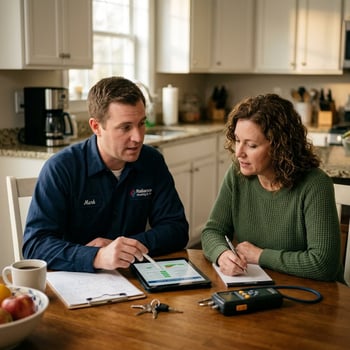 The fastest way to flatten margin during peak season is letting your techs race through tickets without truly diagnosing the home.
A diagnostic-first visit isn't slow. It's structured. The tech checks the failed component, but also evaluates system age, capacity, ductwork, refrigerant performance, and indoor air quality. That broader scope opens doors to:
- Recommend repair vs. replacement with real data instead of gut feel
- Identify IAQ issues the customer didn't know existed
- Spot aging equipment that's a candidate for proactive replacement before next summer
- Document warranty and maintenance candidates for future revenue
This is process, not product, which means it scales without adding overhead. The training is repeatable. The result is a higher average ticket per call without pressuring techs to "sell."
More importantly, every diagnostic-first call is how you find the aging systems that become next month's install. And install day is where the rest of this playbook earns its keep.
Tactic 2: Use Maintenance Agreements as a Cooling Season Lifeboat
Recurring revenue is what separates contractors who breathe through shoulder seasons from contractors who panic.
Every cooling-season service call is a chance to convert a one-time customer into a maintenance plan member. The economics are simple: maintenance plans cover overhead during slow months, lock in repeat business, and dramatically increase the odds of winning replacement work down the road.
For HVAC owners, the math gets more interesting when you bundle. A monthly maintenance membership can include:
- Two seasonal tune-ups (spring and fall)
- Priority scheduling during peak demand
- IAQ filter checks and changes
- Discounted parts and labor
- A wrapped-in extended labor warranty (more on that below)
Pricing matters here. A $19 to $29 per month membership feels manageable to homeowners, especially when financed against a single-visit charge. Once they're in, you've built recurring revenue, the kind that smooths out cash flow and reduces your dependence on weather and luck.
The membership is also one of the easiest items to attach on install day. When the new system is going in, the maintenance plan rides alongside it as the natural next step in the conversation.
Tactic 3: Reposition Indoor Air Quality as Core Comfort, Not an Upsell
 Indoor air quality is one of the most underutilized margin lanes in HVAC. The product economics are excellent (filtration, UV systems, dehumidifiers, and ventilation upgrades carry strong markup), but most contractors still treat IAQ as a tacked-on add-on.
The shops that have cracked it stopped framing it that way. They bundle IAQ checks into every maintenance visit and treat it as a core piece of comfort rather than an upgrade.
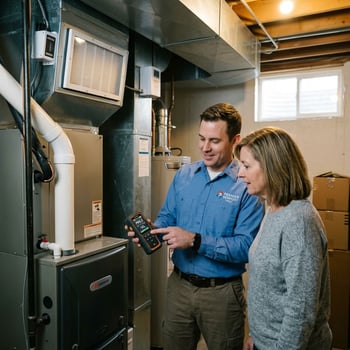
The conversation starts with symptoms a homeowner already feels: dry throats, dust settling too quickly, lingering cooking odors, or allergy flare-ups. Then a tech uses a simple handheld monitor to give the customer something visible to look at. Before-and-after readings close more deals than any printed brochure.
Why this works for owner economics:
- IAQ products carry healthier margins than equipment
- Sales happen during existing visits, with zero customer acquisition cost
- They're inherently recurring (filters, UV bulbs, dehumidifier servicing)
- They fit naturally into the maintenance plan
Install day is when IAQ pays off the most. The crew is already on site, the ductwork is already exposed, and the customer is already mentally invested in upgrading their comfort. Adding a whole-home filtration system or UV unit at that moment costs a fraction of the disruption it would take on any other visit.
Tactic 4: Use Financing to Disarm the Affordability Objection
The biggest single sales killer in cooling season isn't price. It's payment.
A homeowner staring at a $13,000 replacement quote in July isn't necessarily saying no to your work. They're saying no to writing a five-figure check this week. Offering flexible payment options has become standard practice as new HVAC systems represent a major expense for cautious consumers.
Financing flips the math:
- $13,000 lump sum becomes a manageable monthly payment
- Close rates on replacement quotes go up
- Average ticket size goes up because financed customers tend to opt into better systems
- Fewer "let me think about it" stalls turn into ghosted leads
For owners, financing isn't a customer perk. It's a margin tool. It lets you sell the system you actually recommend instead of the system the customer thinks they can afford on the spot. JBFin Commercial is built specifically for HVAC contractors who want to add this option without standing up their own lending program.
Financing is the foundation that makes the install-day stack possible. Without it, every other tactic on this list is competing with sticker shock.
Tactic 5: Wrap Every Install in an Extended Labor Warranty
 This is where the playbook compounds. Every other tactic on this list creates a moment of customer trust. An extended labor warranty cements that trust into a long-term margin advantage.
For HVAC business owners, an extended service agreement (ESA) does five things at once:
- Differentiates from price-cutting competitors. When two quotes hit a kitchen table and yours is the only one with multi-year labor coverage, the price-only comparison breaks down.
- Reduces callback exposure. Labor coverage shifts the cost of post-install issues off your books.
- Drives recurring revenue. Warranty wrap-ins anchor maintenance plan retention. Customers who hold a warranty stay with the contractor who placed it.
- Premium positions the business. Manufacturer warranties cover parts. Extended labor warranties signal that you stand behind the work itself, which is a different category of trust.
- Protects your reputation. A homeowner with a covered system who calls about a failure becomes a service opportunity, not an angry online review.
The objection most owners raise is "we already offer manufacturer warranties." That's the wrong frame. Manufacturer coverage handles defects in parts. Extended labor warranties cover the labor cost when something breaks two summers from now. The two products serve different purposes, and the bundled offer is what wins quotes.
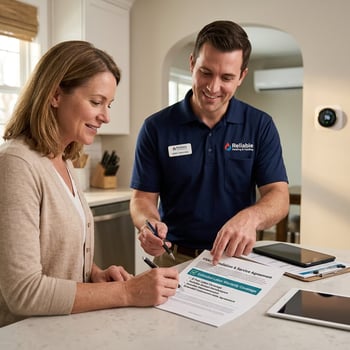
JB Warranties pairs naturally with the rest of the cooling-season playbook because the wrap-in moment happens at install. Your tech is already on site, the customer is already signing paperwork, and the conversation is already about long-term comfort. By becoming an authorized JB Warranties dealer, you can build extended labor coverage into every quote through the HVAC extended warranty program for contractors, so customers see the full value upfront and your business is protected when complex new components fail down the road.
Tactic 6: Train Techs to Sell Outcomes, Not Products
The owner pain point that ties all six tactics together: techs who don't consistently upsell, or who avoid it because they fear sounding pushy.
The fix isn't a sales script. It's a different mental model. Train techs to walk customers through the home as a system (the equipment, the air, the comfort, the protection) instead of pitching individual products.
Three practical moves:
- Lead with health and comfort, not features. Allergies, humidity, dust, energy bills, peace of mind. These are the homeowner's words, not yours.
- Use proof, not pressure. IAQ readings, system age data, warranty paperwork, financing terms. Let the data make the case.
- Tie comp to layered revenue. If you only commission tech upsells on equipment, you'll only see equipment sales. Reward maintenance memberships, IAQ wins, warranty wrap-ins, and financing approvals proportionally.
The tech who explains a $25-per-month maintenance plan with a wrap-in warranty isn't selling. They're protecting the customer's comfort. That's the framing that lasts. And it's the framing that turns install day from a single transaction into a stack of compounding revenue.
The Install-Day Stack: Where Five Tactics Compound
Picture two install days at the same shop, on the same kind of $13,000 replacement.
Without the playbook:
The crew shows up, swaps the equipment, walks the homeowner through the new thermostat, and leaves. The customer paid cash or strained their savings to cover it. The next time you'll hear from them is when something breaks, eight to twelve years from now, assuming they don't call a competitor first. Total revenue: $13,000. Lifetime value: uncertain.
With the playbook:
Same install. Same crew. Same equipment. Different conversation.
- The replacement is financed at a manageable monthly payment, so the customer signed without flinching at the total. (Tactic 4)
- An $850 IAQ filtration system gets installed alongside the new equipment while the ductwork is open. The crew is on site anyway, so the marginal labor cost is near zero. (Tactic 3)
- A $1,200 wrap-in extended labor warranty rides on top of the equipment warranty, giving the customer multi-year labor coverage and removing your callback exposure. (Tactic 5)
- A $25-per-month maintenance membership gets signed before the truck leaves the driveway, locking in two annual visits, IAQ filter changes, and priority scheduling. (Tactic 2)
- The whole conversation is led by a tech trained to talk about comfort and protection rather than push product. (Tactic 6)
Five tactics stacked on the same job. Add it up:
- $13,000 install (financed)
- $850 IAQ upgrade
- $1,200 warranty wrap-in
- $300 per year in maintenance plan revenue, recurring
- A customer locked into your business for the next decade instead of disappearing into the market
Tactic 1 is what made the whole stack possible. The diagnostic-first service call months earlier is how you found the aging system, flagged it for replacement, and earned the install in the first place.
That's the difference between a busy cooling season and a profitable one. The owners who win the second half of 2026 won't be the ones with the most leads. They'll be the ones who built the install-day stack into every job.
Frequently Asked Questions
What's the most profitable upsell during HVAC cooling season?
Indoor air quality products typically carry the strongest margins relative to their installation effort. Whole-home filtration, UV systems, and dehumidifiers fit into existing service calls without extra dispatches, and they compound revenue when bundled into maintenance plans. The bigger margin lift, though, comes from layering: IAQ plus maintenance membership plus extended labor warranty plus financing on the replacement.
How do I get my techs to consistently offer warranties and IAQ products?
Stop framing it as selling. Train techs to walk customers through the home as a system (equipment, air quality, comfort, long-term protection) and use real data like IAQ monitor readings, system age, and warranty paperwork to make recommendations. Then align comp so that maintenance plans, IAQ wins, and warranty wrap-ins are rewarded alongside equipment sales.
Are maintenance agreements really worth the discounted labor rate?
Yes. The math isn't about the discount, it's about retention. Maintenance customers come back for repairs, replacements, and upgrades far more reliably than one-off customers. Recurring monthly revenue smooths out shoulder seasons, and members are dramatically more likely to buy their next system from you. The discount is the cost of locking in lifetime value.
How does an extended labor warranty differ from a manufacturer's warranty?
Manufacturer warranties cover parts. If a compressor fails, the part is replaced. Extended labor warranties cover the labor cost of repairing covered systems, which is often the bigger out-of-pocket expense for homeowners. Bundling both gives customers complete protection and gives contractors a meaningful differentiator against price-only competition at the kitchen table.
Should I offer financing on every replacement quote?
For most contractors, yes. Financing turns "I can't write a $12,000 check" into "I can swing a monthly payment," which lifts close rates and average ticket size. It also lets you sell the system you actually recommend rather than the cheapest one the customer thinks they can afford. Make it a standard quote element, not a special offer pulled out at the end.
How should I price a cooling season maintenance membership?
Most successful HVAC memberships sit between $15 and $30 per month, billed monthly or annually. The price should cover two seasonal tune-ups, priority scheduling, modest parts and labor discounts, and ideally a wrapped-in extended labor warranty. The goal isn't to maximize per-customer revenue. It's to build a recurring base that smooths out your year and feeds future replacements.
When in the cooling season should I launch these new tactics?
Start before the season, not during it. Roll out training, scripts, and tools in early spring so techs have time to practice low-pressure visits before the call volume hits. Mid-summer is for execution, not implementation. If you're reading this in peak season, focus on one tactic, usually maintenance memberships or warranty wrap-ins, and build from there going into fall.

Brian Bohannan
Vice President of Sales at JB Warranties