



Summer is when the phone rings off the hook. It is also when a lot of HVAC owners realize how much of their revenue rides on the weather. When the heat finally breaks, the schedule breaks with it, and the same crew that was slammed in July is hunting for billable hours by October.An HVAC maintenance membership is one of the most dependable ways to flatten that curve. Done right, it converts one-time summer service calls into predictable, year-round income and a customer base that calls you first instead of shopping around. This guide walks through what a membership actually is, why the model fits the way HVAC revenue behaves, how to structure one that sells, and where an extended labor warranty fits on top of it.
What an HVAC maintenance membership actually is
A maintenance membership (sometimes called a service agreement or a club membership) is a recurring plan your customer pays for on an annual or monthly basis. In exchange, you perform scheduled tune-ups, usually once or twice a year, and typically fold in perks like priority scheduling, discounted repairs, and waived diagnostic fees.
The mechanics are simple, but the business effect is the part owners care about. Sold as a service agreement or club membership, these plans generate guaranteed, recurring revenue and give homeowners peace of mind that you will show up and keep their equipment running. You can read ServiceTitan’s full breakdown of the model for a deeper look, but the short version is that a membership tethers a customer to your brand and gives you a reason to be in their home when nothing is broken.
Why the membership model fits the summer-ops moment
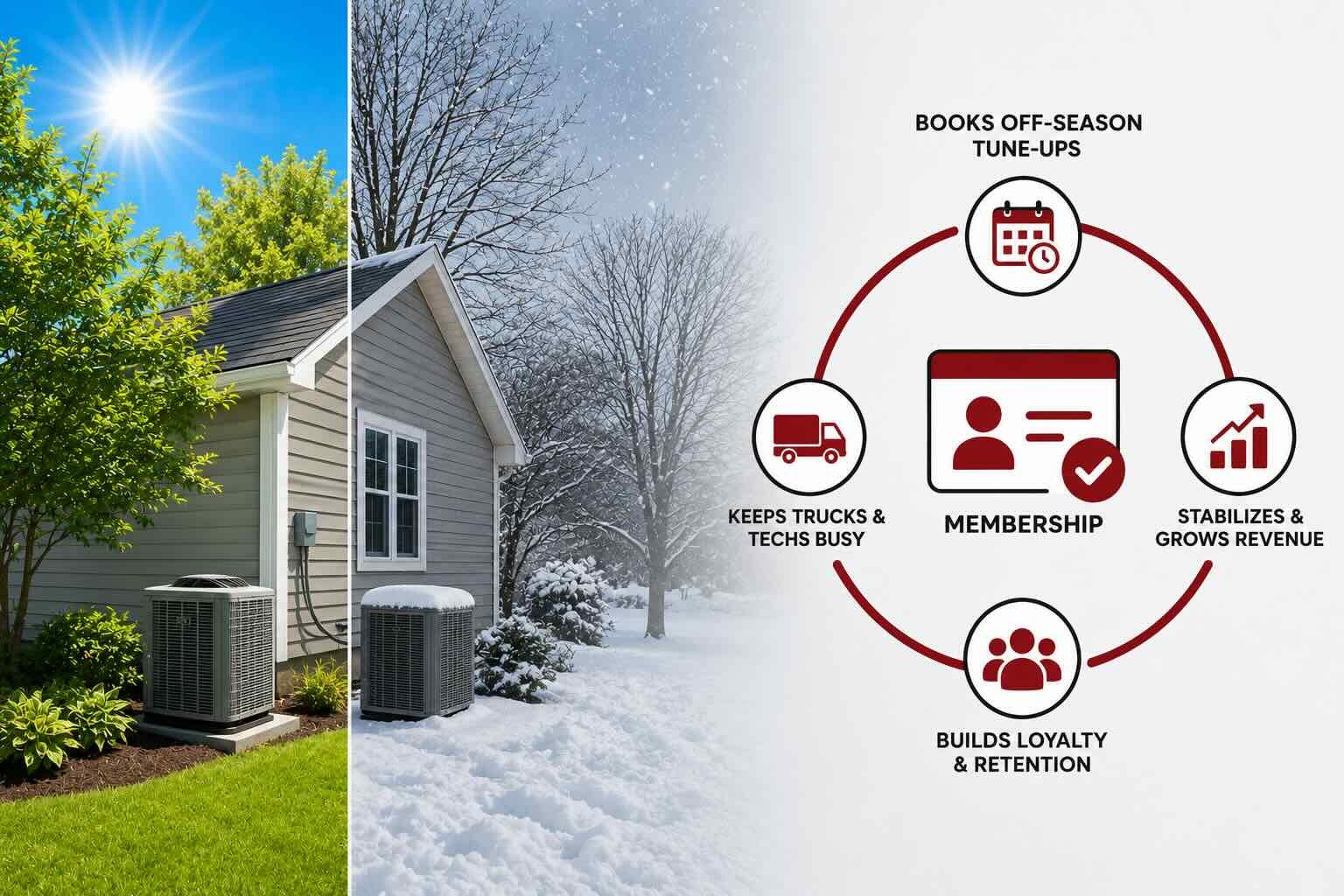
HVAC revenue is seasonal by nature, and that is exactly the problem a membership solves. Every service business weathers slow periods when revenue can dwindle, and in HVAC, those peaks and lulls swing with the season. Maintenance contracts help stabilize revenue during the slow times and grow the customer base.
Think about the practical rhythm. A membership sold during your busy cooling season books a tune-up visit in the shoulder months, when your techs would otherwise be idle. That visit keeps trucks moving, keeps payroll productive, and puts your team in front of aging equipment right before it is likely to fail. For an owner whose biggest frustration is revenue capped by labor capacity, that is capacity you have already paid for, finally earning its keep.
There is a retention angle, too. A member has a standing reason to call you and no reason to price-shop a competitor for routine work. Over a ten-plus-year equipment lifecycle, that relationship is where replacement sales and referrals come from.
How to structure a membership that sells
A membership program lives or dies on how you build it. Here is where the how-to matters.
Decide your tiers and what is included
Most successful programs offer two or three tiers rather than one. A good-better-best structure lets a budget-conscious homeowner say yes to something while giving your best customers a premium option. Define each tier by visit frequency, repair discount, priority-service level, and any add-ons like filter delivery. Keep the differences clear enough that a customer can pick in under a minute.
Price for value, not just cost
Price to your seasonal challenges and your long-term goals, not just the cost of a tune-up. As a reference point, a ServiceTitan advisor describes typical residential memberships running roughly one to two recurring visits a year at somewhere around $100 to $500 annually, depending on equipment and scope. Treat that as a starting range to sanity-check against, not a rule. Your market, your cost structure, and your tier design should drive the final number.
Make renewals automatic
The quiet killer of membership programs is manual renewal tracking. If you are chasing expirations in a spreadsheet, you will lose members and the recurring revenue attached to them. Set members up on autopay and automated renewal reminders from day one. Whether you run field service management software or a simpler system, the goal is the same: no member should ever lapse because someone forgot to follow up.
Equip your techs to offer it without the sales pressure
Your technicians are the ones who sell memberships, and most of them do not want to feel like salespeople. Take the pressure off by giving them a simple, repeatable way to explain the value: the plan covers the tune-up you just did, gets the customer to the front of the line in a heat wave, and knocks a percentage off any repair. When a tech genuinely believes the plan protects the customer, that belief carries the conversation. Back them with a clear script and consistent expectations so the offer sounds the same on every truck.
The honest part: memberships are a bridge, not the whole bridge
Here is the piece a lot of "sell more memberships" advice skips. On their own, maintenance visits are not where the profit lives. Every maintenance call carries real cost in labor, truck, parts, and fuel, and only a small share of those calls generate meaningful additional revenue on the spot. The value shows up in what the membership leads to. As Contracting Business frames it, maintenance agreements are best understood as a bridge to more profitable work, the repairs, upgrades, and system replacements that come from being the trusted name already in the home.
That reframing matters for how you measure the program. Judge a membership not by the margin on the tune-up, but by the replacement and repair revenue it feeds over time. Build it as a customer-retention engine, and the profit follows.
Layer extended labor warranties on top for real recurring value
If a membership keeps customers close, an extended labor warranty is how you deepen the value of every job they bring you. The two work together. Pairing maintenance plans with extended labor coverage strengthens customer retention and creates a more compelling value proposition, while generating consistent recurring revenue for contractors. You can see that logic play out in Contracting Business’s read on staying profitable in a cost-conscious market.
This is where a partner like JB Warranties™ fits into the picture. Adding an extended labor warranty program to the systems you install gives homeowners protection beyond the manufacturer’s parts coverage, and it gives you another reason for that relationship to keep paying off. Fast claims handling, no deductibles, and free transfers mean the coverage protects your reputation as much as it protects the customer, without adding claims headaches to your plate.
The point is not to replace your membership with a warranty, or to hand your program off to someone else. It is to stack two recurring-value layers, one you run and one a warranty partner backs, so more of your revenue is stable and repeatable. Whether you are already running memberships, using another program, or building this from scratch, becoming a JB Warranties dealer is a low-friction way to add that second layer.
Putting it together before cooling season peaks
The best time to build a membership program is before the busy season, so your techs are offering it at the exact moment demand is highest. Set your tiers, price them to value, put renewals on autopilot, and give your team a simple way to talk about it. Then decide how extended labor coverage rounds out the offer. That combination turns a weather-dependent revenue stream into something you can actually forecast.
Frequently Asked Questions
What is an HVAC maintenance membership?
It is a recurring plan a homeowner pays for annually or monthly. In return, you provide scheduled tune-ups (usually one or two a year) plus perks like priority scheduling, waived diagnostic fees, and discounted repairs. For the contractor, it creates predictable recurring revenue and a loyal customer base that calls you first for repairs and replacements.
How much should I charge for a maintenance membership?
It depends on visit frequency, coverage, and your market. As a starting reference, ServiceTitan guidance describes typical residential plans running roughly $100 to $500 per year for one to two visits. Price to your seasonal costs and long-term goals rather than just the cost of a single tune-up, and use tiers so customers can pick the level that fits.
How is a maintenance membership different from an extended warranty?
A membership covers routine, scheduled maintenance you perform, like seasonal tune-ups. An extended labor warranty covers the labor cost of repairs after a covered failure, beyond the manufacturer's parts coverage. They solve different problems and work well together: the membership keeps the customer close, and the warranty protects the value of the equipment you installed.
Do maintenance memberships actually make money?
Not usually on the tune-up alone. Industry experts describe memberships as a bridge to more profitable work rather than a profit center by themselves. The real return comes from the repairs, upgrades, and replacements you earn by being the trusted contractor already in the home. Measure the program by that downstream revenue, not just the plan fee.
How do I get my techs to sell memberships without being pushy?
Give them a short, repeatable explanation tied to value: the plan covers the tune-up, provides priority service in a heat wave, and discounts repairs. Techs sell best when they believe the plan genuinely helps the customer. Back them with a consistent script and clear expectations so the offer sounds the same on every job.
When is the best time to launch a membership program?
Before your peak season. Selling memberships during a busy cooling season books tune-up visits in the slower shoulder months, keeping your crew productive year-round. Launching ahead of demand also means your techs are offering the plan when customers are most motivated to protect their comfort and their equipment.

Jenna Ochoa
Vice President - Claims, JB Warranties